Uncovering the soul of your Victorian home starts with its warmest feature. Here is your guide to bringing an original fireplace back to life—beautifully and, most importantly, safely.
If the kitchen is the heart of the modern home, the fireplace was historically the soul of the Victorian house.
Walk into any well-preserved Victorian home, and your eye is immediately drawn to the Victorian fireplaces and mantels. In an era before central heating, these weren't just decorative focal points; they were essential for survival. A typical middle-class Victorian home might have had a fireplace in almost every room—from the imposing marble structure in the drawing room to smaller cast-iron versions in the bedrooms.
Today, many of these magnificent features have been boarded up, painted over, or neglected for decades. Uncovering one felt like striking gold during your renovation. But before you light that first fire, you need to go through a crucial process of restoring your Victorian home and safety checks.
Bringing a Victorian hearth back to life is a two-part process: ensuring it won't burn the house down, and making it look spectacular again.
Here is your guide to restoring the hearth of your home.
Phase 1: The Non-Negotiable Safety Audit
It is tempting to start scrubbing the tiles and polishing the brass. Resist this urge. If you plan to use the fireplace for more than holding candles, safety is paramount. A 130-year-old chimney is guilty until proven innocent.
STOP! Do not light a fire in an un-inspected Victorian fireplace.
Victorian chimney stacks are complex, often twisting and turning to connect multiple flues from different floors. Over a century, mortar crumbles, bricks shift, and old soot turns into flammable creosote.
1. Call the Professionals (The Chimney Sweep)
Your first call must be a certified chimney sweep experienced with historic properties. A standard "brush and vac" isn't enough for a restoration job. You need a full inspection.
- The Smoke Test (Draw Test): The sweep will light a smoke pellet in the grate to ensure the chimney "draws" the smoke up and out of the pot, rather than spilling it back into the room.
- The Integrity Test (Leakage): This checks if smoke leaks through the chimney walls into upstairs bedrooms or, worse, the neighbor's house. This is vital for preventing deadly carbon monoxide poisoning.
- The CCTV Survey: The gold standard of inspection. A camera is lowered down the flue to identify cracks, blockages (birds' nests are common), or structural failure in the brickwork.
2. The Flue Liner Solution
It is likely your sweep will tell you the original brick flue is leaking. Victorians parged their flues with lime mortar, which deteriorates over time.
To make the fireplace functional again, you will almost certainly need a flexible stainless steel flue liner installed. This provides a sealed, safe tube from the fire basket to the chimney pot, bypassing the old brickwork.
3. The Hearth Stone
Check the floor area in front of the fireplace. Building codes require a non-combustible hearth (usually slate, stone, or tile) extending a specific distance from the fire. If previous owners put carpet up to the grate, that needs to change.
Phase 2: The Aesthetic Restoration
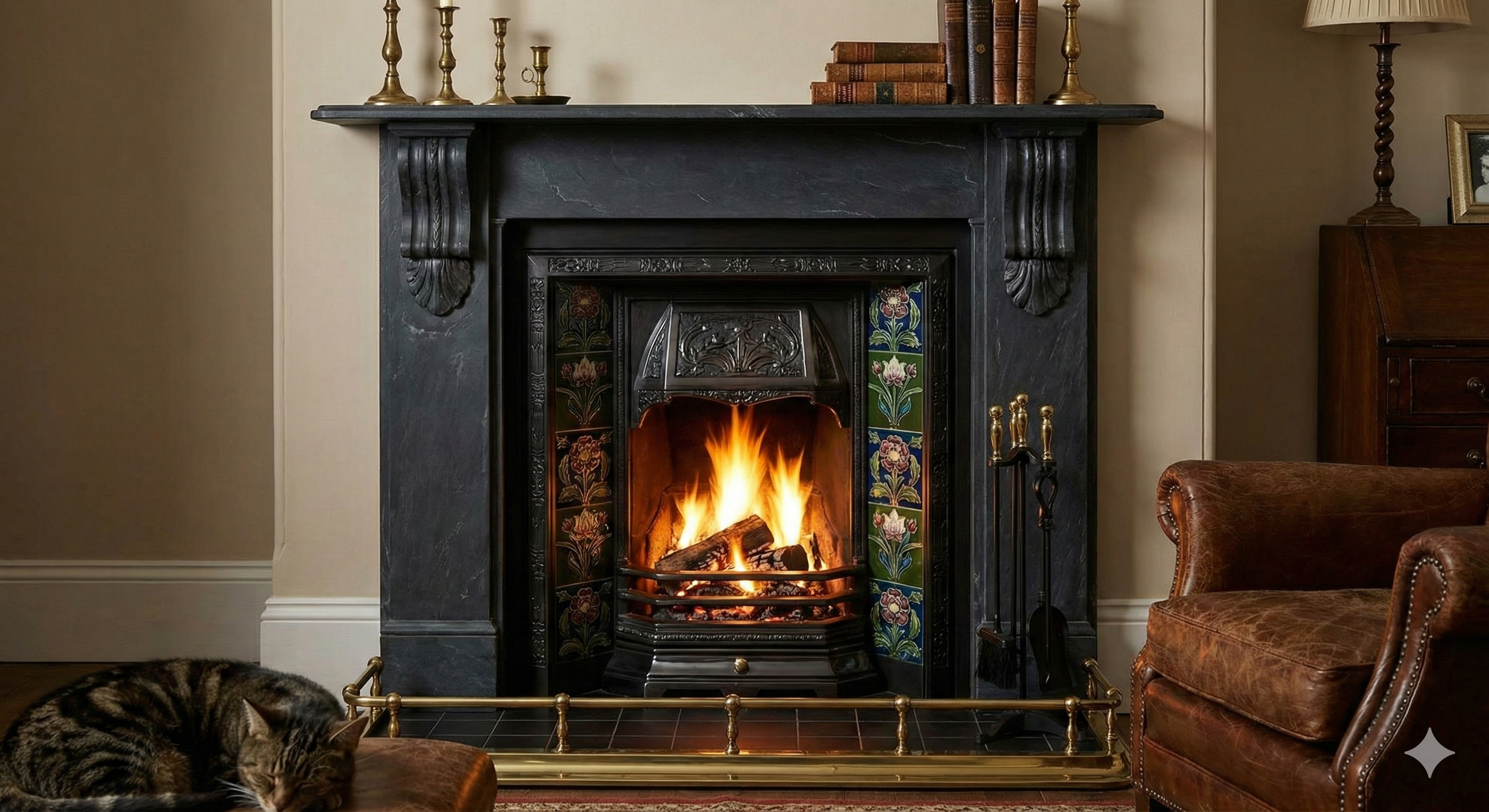
Once you know the structure is safe or have decided to keep it decorative, the fun begins. Victorian fireplaces are usually a mix of three materials: cast iron, ceramic tile, and a surround (mantel) made of wood, slate, or marble.
1. Tackling the Cast Iron
The fire basket and decorative insert are usually cast iron. After decades of neglect, they are likely covered in rust or layers of thick paint.
- Stripping Paint: Use a chemical stripper for metal to remove old paint layers. Be patient; it’s messy work.
- Removing Rust: Wire wool, wire brushes, and elbow grease are your best tools. For severe rust, a rust converter can help.
- The Finish: Once clean and dry, apply "grate polish" or "stove blacking." This graphite-based paste is applied with a brush and buffed to a silvery-black sheen. Do not use standard black paint on the inside of the grate where the fire sits; it will burn off and smell terrible. Only use high-heat stove paint if you must paint rather than polish.
2. Reviving Victorian Tiles
The vertical tile panels on either side of the grate are often the jewels in the crown. They are usually tubelined or encaustic tiles.
- Cleaning: Start gentle. Warm water and mild dish soap are usually enough. Avoid harsh modern bathroom cleaners or acids, which can etch the glaze and ruin the patterns.
- Removing Paint Splatters: If careless decorators have splashed emulsion on the tiles, carefully use a glass scraper held flat against the tile surface to shave the paint off.
- Repairs: If tiles are cracked or missing, you have options. Specialist restoration companies can repair them, or you can find original replacements from architectural salvage yards. There are also excellent reproduction tiles available today.
3. The Surround (Mantelpiece)
- Marble: Clean gently with specialized marble cleaner. Be wary of acidic stains like wine or lemon juice, which etch marble. Deep stains may require a professional poultice.
- Slate: Often painted to look like marble in the Victorian era. If you want to restore the slate, it needs careful stripping. Once clean, slate oil will restore its deep black color.
- Wood: Often heavily painted. Strip it back to reveal the grain, then treat it with beeswax or a suitable varnish.
The Final Decision: Functional or Decorative?
After the safety checks and the cleaning, you have a decision to make about how the fireplace will live in your modern home.
- The Real Fire Experience: You've had the flue lined and passed the safety checks. Nothing beats the crackle of logs or smokeless coal on a winter night. Ensure you know if you live in a Smoke Control Area, which dictates what fuel you can legally burn, and consider how to insulate without losing character.
- The Gas Compromise: You can install a coal-effect gas fire into an original Victorian cast iron insert. It gives you instant heat and ambiance without the ash or the need to haul logs, but still requires a sound chimney for venting.
- DECORATIVE ONLY (The Easiest Path): If the chimney is too expensive to repair, or you just don't want the mess of a fire, keep it beautiful but dormant. Fill the grate with a large arrangement of church candles, dried hydrangeas, or even a stack of attractive birch logs that you never intend to burn. It remains a stunning focal point without the functional headache.
Restoring a Victorian fireplace is rarely a quick weekend job; it’s part of the larger process of restoring Victorian houses. It is messy, sometimes frustrating, and can be expensive if flue work is needed.
But when you finally step back and see the firelight dancing on the freshly polished tiles, exactly as a family did in 1895, you realize it wasn't just a renovation project. You have preserved original features and put the soul back into your home.