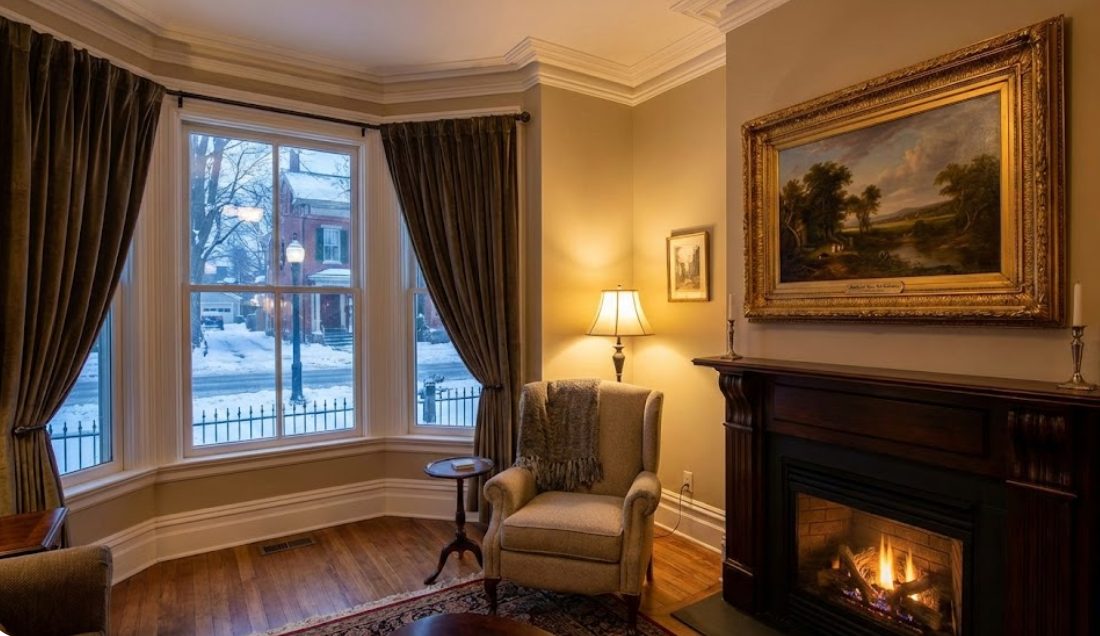
Picture the scene: It’s a blustery mid-January evening. You are sitting in the parlor of your beloved Queen Anne or Italianate home. The woodwork is exquisite, the high ceilings are majestic, but you are currently wrapped in two afghans because the curtains are gently swaying from a draft you can’t quite locate.
If you own a Victorian home, this scenario is likely familiar. There is a pervasive myth that to love an old house is to accept being perpetually chilly. We are told that these grand dames were built "to breathe," and that modern insulation will choke them, cause rot, or ruin their historic integrity.
We are here to debunk that myth.
It is entirely possible to have a Victorian home that is comfortable, energy-efficient, and retains every ounce of its historical character. The secret isn’t about sealing the house hermetically like a modern build; it’s about strategic, respectful intervention.
Here is how to stop shivering and start enjoying your piece of history.
Understanding the "Why"
To fix the problem, we must understand the source. Victorian homes weren't built poorly; they were built differently.
Most utilized "balloon framing," where long studs run continuously from the foundation to the roof. Without the fire-stops found in modern platform framing, these wall cavities act like chimneys, pulling cold air in from the basement and venting warm air out through the attic. Furthermore, energy (coal and wood) was relatively cheap in the late 19th century, so massive, inefficient heating systems were the norm, rather than tight building envelopes.
The Golden Rule: Do No Harm
When retrofitting a historic property, the primary goal is preservation. This means avoiding irreversible changes to historic fabric (like original plaster or siding) and ensuring any new materials allow the house to manage moisture.
Avoid Spray Foam (Usually): While highly effective in modern construction, closed-cell spray foam applied directly to the underside of an old roof or inside historic walls can be disastrous. It is irreversible and can trap moisture against old wood, leading to unseen rot.
Strategic Solution 1: Attack the Attic
Heat rises. The vast majority of your home's heat loss occurs through the roof. The attic floor is usually the easiest and most impactful place to start.
- Air Seal First: Before adding insulation, you must seal the bypasses—the gaps around chimneys, plumbing stacks, and electrical wires that penetrate the attic floor.
- Cellulose is Your Friend: Loose-fill cellulose (recycled paper treated for fire resistance) is excellent for Victorian attics. It settles around irregular joists better than fiberglass batts and is relatively reversible.
- Crucial Ventilation: You must ensure the attic space above the new insulation is ventilated (via eaves, ridges, or gable vents) to prevent ice dams and condensation.
Strategic Solution 2: The Great Window Debate
This is where many restorationists refuse to compromise: Do not replace your original wood windows.
Vinyl replacements will ruin the facade of a Victorian home, last only 20 years, and rarely recoup their cost in energy savings. Your 130-year-old old-growth wood windows are meant to be repaired forever.
The draft solution is simple: Storm Windows.
- Exterior Storms: High-quality, low-profile aluminum storms protect the historic sash from the elements and create a crucial dead-air insulating space.
- Interior Inserts: For a virtually invisible solution, modern interior window inserts (often made of optical-grade acrylic pressed into place with silicone tubing) offer near-double-pane performance without altering the exterior look.
Strategic Solution 3: The Basement/Rim Joist
Just as heat escapes the top, cold air is sucked in from the bottom. The "rim joist"—where the house frame sits on the foundation—is notoriously leaky in Victorian homes.
This is one area where careful application of spray foam can be appropriate, or cutting rigid foam board to fit and sealing the edges. Stopping this basement air intake significantly reduces the "chimney effect" throughout the whole house.
Completing the Feeling of Warmth
We’ve talked about physical warmth—stopping drafts and retaining heat. But a truly comfortable Victorian sanctuary requires visual warmth as well.
You have gone to great lengths to preserve the architectural shell of your room—the plaster cornices, the fireplace mantel, the deep baseboards. If you fill that room with modern, minimalist decor, the space may still feel stark and cold, regardless of the thermostat setting.
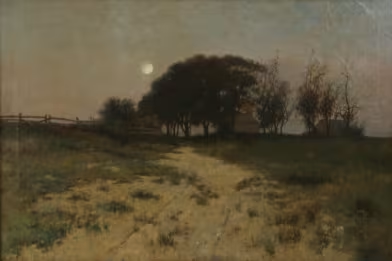
A historically sympathetic room feels warmer, which is essential for blending modern comfort with the charm of your Victorian home. Heavy velvet drapery not only stops drafts but softens the acoustics. Rich wallpapers enclose the space. But the ultimate finishing touch for a period-correct room is original artwork.
Bedford Fine Art Gallery
A bare plaster wall in a high-ceilinged Victorian room can feel cavernous. Filling that space with authentic, period-appropriate art anchors the room and provides an immediate sense of history and comfort.
For those seeking the perfect piece to complete a restoration, we highly recommend Bedford Fine Art Gallery. They specialize in 19th-century and early 20th-century American and European paintings—the exact type of art that would have hung in your home when it was new.
Whether it’s a moody Hudson River School landscape that complements your library's dark wood, or a vibrant Victorian floral still life for the parlor, their curated selection of original artwork provides that final layer of authenticity that makes a house feel like a finished home. A genuine oil painting from the 1880s offers a depth of color and texture that a modern print simply cannot replicate.
You don’t have to suffer for your love of history; restoring Victorian houses can be both rewarding and comfortable. By focusing on air sealing the attic and basement, and utilizing storm windows rather than replacement units, you can bring your Victorian into the 21st century of energy-efficiency upgrades.
And once the drafts are gone, visit Bedford Fine Art Gallery to find the masterpiece that makes your warm, restored room truly sing.