One of the most rewarding aspects of restoring a Victorian home is uncovering its soul. But too often, that soul has been stripped away by decades of "modernization." You walk into a room and realize the five-panel doors are gone, replaced by hollow-core substitutes. The ornate brass hardware has been swapped for generic silver knobs. The intricate, multi-layered crown molding has been simplified—or removed entirely.
Restoring these missing elements is crucial for reclaiming your home’s historical integrity. But you can’t walk into a big-box hardware store and buy period-correct 19th-century millwork off the shelf. To find the authentic doors, hardware, and trim your Victorian home deserves, you must become a vintage detective and learn the art of sourcing salvage.
In this post, we’ll guide you through the best places to hunt for these architectural treasures and offer tips on how to bring them back to life.
The Importance of Authenticity
Before we dive into where to look, let’s talk about why. Why not just buy reproduction pieces?
Reproduction hardware and trim have their place, but nothing matches the quality, patina, and character of original Victorian materials. Old-growth lumber used for doors and trim is denser, more stable, and more durable than anything available today. Antique brass and iron hardware have a weight and craftsmanship modern manufacturing rarely replicates.
Most importantly, original pieces carry a story. They hold the history of your home and the era in which it was built. Using authentic salvage is an act of preservation.
Where to Find Your Treasures
Here are the primary sources for authentic Victorian architectural salvage:
1. Architectural Salvage Yards
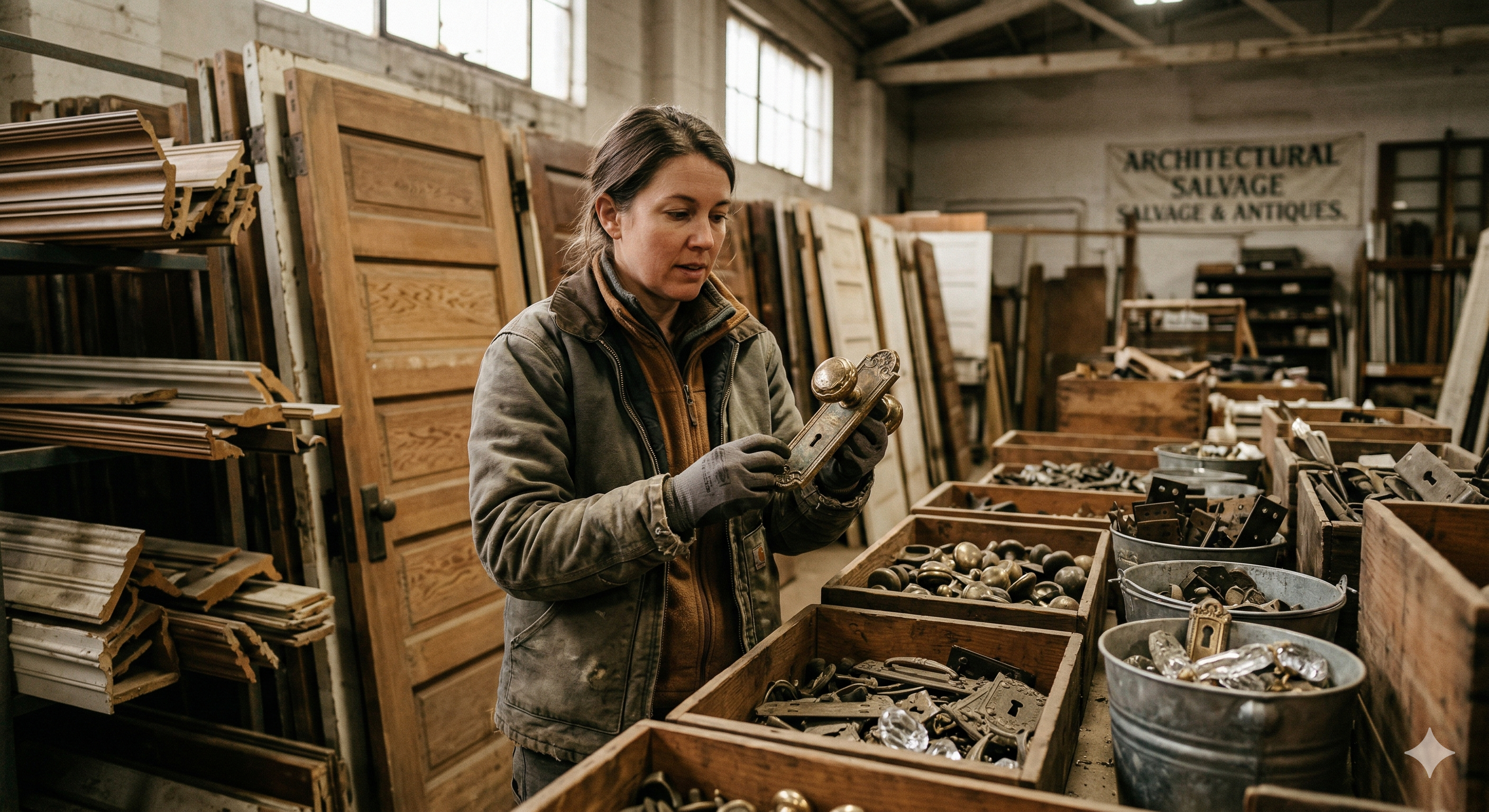
These are the holy grails for restorers. Salvage yards rescue elements from historic buildings slated for demolition. Walking into one is like entering a museum where everything is for sale.
- What you’ll find: A massive selection of solid wood doors (interior and exterior), entire sets of matching trim and molding, spindlework, corbels, mantels, and buckets full of antique hardware.
- Pro Tip: Bring measurements, sketches, and photos of what you are trying to match. These places are vast, and it’s easy to get overwhelmed. Dig in; sometimes the best treasures are buried under dust.
2. Architectural Reuse Centers & Habitat for Humanity ReStores
These organizations operate like salvage yards but often have a non-profit mission focused on waste reduction and affordable housing. Their inventory may be less curated than a specialized salvage yard, but their prices are much lower.
- What you’ll find: A rotating inventory of doors, windows, light fixtures, and sometimes sections of older trim or cabinetry salvaged from local renovations.
- Pro Tip: Visit often. New items arrive daily, and the best period-correct pieces are snapped up quickly by contractors and restorers.
3. Estate Sales and Auctions
When a historic estate is liquidated, fixtures are sometimes sold with the furniture. This is a great way to find high-end, matching sets of hardware that have been in one house for over a century.
- What you’ll find: Complete doorknob sets (locks, plates, knobs), unique window hardware, ornate hinges, and sometimes even lighting or mantels.
- Pro Tip: Check sale photos online beforehand. If the house is the right era, it might be worth attending. Arrive early on the first day for the best selection or on the last day for the best prices.
4. Demolition Sites (With Permission!)
If you see a Victorian-era building being demolished in your area, it’s worth investigating. Always ask for permission from the foreman or property owner before entering a site. Often, they are happy to let you salvage items they were going to throw away.
- What you’ll find: This is where you can score bulk trim, baseboards, door casings, and doors for free or for a nominal fee.
- Pro Tip: Be prepared to work quickly and bring your own tools (crowbars, hammers, screwdrivers). Follow all safety rules.
5. Online Marketplaces
Don't overlook the digital world. Websites like eBay, Etsy, and Facebook Marketplace can be excellent resources, especially for specific, smaller items.
- What you’ll find: eBay and Etsy are great for sourcing specific hardware (like "Eastlake doorknobs" or "Victorian pocket door pulls"). Facebook Marketplace is better for bulkier items like doors or trim from local sellers.
- Pro Tip: Be careful with dimensions and shipping costs. Shipping a solid oak front door is expensive. For hardware, search for matching patina if you only need one or two pieces to complete a set.
Tips for the Salvage Hunt
- Measure Twice, Buy Once: Victorian homes rarely have standard sizes. Measure your openings and existing trim profile exactly.
- Buy in Bulk When Possible: If you find trim that matches your house, buy every foot they have. It’s better to have extra than to run three feet short.
- Inspect Carefully: Check doors for warpage or severe rot. Inspect hardware to make sure all parts are present (knobs, spindles, set screws).
- Don't Be Afraid of Paint: Almost all salvaged wood trim and doors will be covered in layers of old paint, possibly lead paint. This can be stripped. Focus on the integrity and profile of the wood, not its current finish.
Restoring Your Finds
Once you’ve found your treasures, the real work begins. We have guides on how to restore woodwork and trim, but here is a quick overview:
- Hardware: Most antique brass or bronze hardware just needs a gentle cleaning. A soak in a mild vinegar-and-water solution, or the use of a commercial brass cleaner, will reveal the stunning detail hidden under decades of tarnish. Avoid overly aggressive polishing if you want to preserve the aged patina.
- Doors and Trim: This will likely require paint stripping. Heat guns, infrared strippers, or chemical strippers can all be effective. Remember to follow all safety precautions, especially when dealing with lead-based paint. After stripping, you can repair damage with wood filler or epoxy, sand it smooth, and refinish with a historically accurate stain or paint.
When Salvage Isn't an Option: Reproductions
Sometimes, despite your best efforts, you simply cannot find enough matching salvage to finish a project. In these cases, high-quality reproduction pieces are an excellent alternative.
Specialized companies manufacture trim and hardware that are faithful reproductions of Victorian originals. Some custom millwork shops can cut new knives to match your existing trim profile exactly. While they lack the history of salvage, they offer consistency and availability when you need to finish a whole room.
Restoring your Victorian home is a marathon, not a sprint. Sourcing authentic salvage requires patience, a keen eye, and a willingness to get dirty. The moment you install that perfectly matching 1890s doorknob or see sunlight hit the intricate profile of reclaimed crown molding, you’ll know every moment of the hunt was worth it.