How to Restore Original Victorian Woodwork: Step-by-Step Guide
Learn how to restore original Victorian woodwork with this step-by-step guide, including cleaning, paint stripping, repairs, refinishing, and preservation tips for authentic, historic results.
Introduction: Why Victorian Woodwork Deserves Special Care
Victorian-era homes are treasured for their craftsmanship—especially their ornate wood trim, doors, moldings, and banisters. Made from durable hardwoods like oak, walnut, and mahogany, these architectural details can last centuries if properly restored. Whether you’re renovating a historic home or reviving a single room, knowing how to restore original Victorian woodwork is key to preserving the home’s character and value.
This guide walks you step-by-step through the process of restoring woodwork and trim.
Step 1: Assess the Condition of the Woodwork
Before starting any restoration, perform a detailed inspection.
Look for:
- Paint buildup from decades of repainting
- Cracks, splits, or loose joints
- Water damage or wood rot
- Missing decorative elements (like corner blocks and appliqués)
- Finish deterioration such as fading, peeling, or alligatoring varnish
A thorough assessment helps you decide whether you need simple refinishing, structural repairs, or full restoration.
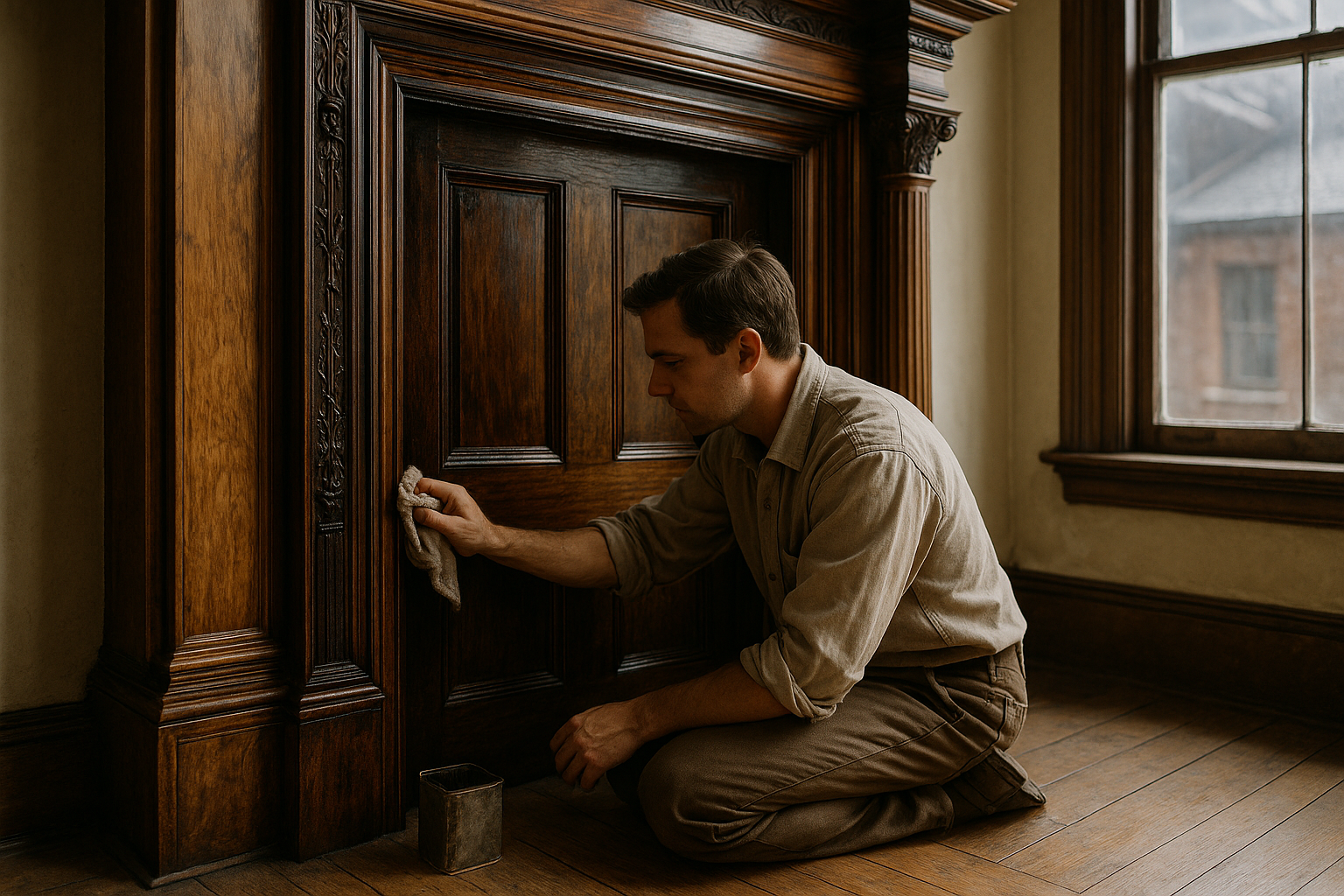
Step 2: Clean the Surface Carefully
Dirt, soot, and wax buildup can mask the true condition of the wood.
How to clean Victorian woodwork:
- Mix warm water with mild dish soap.
- Use a soft sponge or cloth (avoid soaking the wood).
- For stubborn grime, apply mineral spirits with #0000 steel wool.
- Wipe clean and let dry completely.
Cleaning reveals the wood’s actual color and finish so you can plan your next steps.
Step 3: Remove Old Paint or Finish
Old Victorian woodwork often has multiple paint layers or a failing varnish. Removing these gently is crucial to preserving detail.
Option 1: Chemical Strippers
Use a low-odor, solvent-free gel stripper to protect delicate carvings.
- Apply with a brush
- Let it sit until bubbling
- Scrape gently with a plastic scraper
Option 2: Heat Gun
Ideal for thick old paint but requires caution.
- Keep the heat gun moving
- Avoid scorching the wood
Option 3: Sanding (for flat surfaces only)
Use fine-grit sandpaper to protect the wood.
- 180–220 grit recommended
- Never sand decorative carvings heavily
Tip: Victorian details are easily damaged; when in doubt, chemical stripping is safest.
Step 4: Repair Damaged Wood
Once stripped, you can assess structural issues more accurately.
Common repairs include:
- Filling cracks with wood epoxy
- Replacing missing molding sections with matching wood
- Re-gluing loose joints using wood glue and clamps
- Removing and treating minor rot
For authenticity, always use wood species that match the original construction when replacing sections.
Step 5: Sand and Prepare the Wood for Finishing
Proper preparation ensures a smooth, even finish.
How to prep the surface:
- Sand lightly with 220-grit paper
- Vacuum or wipe away dust
- Apply a wood conditioner if using a stain (prevents blotching)
This step is particularly important for softer woods occasionally found in Victorian homes, such as pine.
Step 6: Apply Stain or Finish
Victorian woodwork was traditionally finished in rich, warm tones.
Finishing options:
Stain + Varnish (Classic Victorian Look)
- Apply oil-based stain
- Allow to penetrate
- Wipe off excess
- Seal with multiple coats of varnish or polyurethane
Shellac (Historically Accurate)
A traditional finish offering warmth and period authenticity.
- Dries quickly
- Easily repairable
Natural Oil Finishes
Great for enhancing grain while providing a matte look.
Choose the finish that complements your home’s era and aesthetic.
Step 7: Preserve and Maintain the Restored Woodwork
Ensuring your hard work lasts is key.
Maintenance tips:
- Dust regularly with a microfiber cloth
- Avoid harsh cleaners
- Touch up scratches with matching stain pens
- Reapply protective finishes every 5–10 years depending on wear
Proper care keeps Victorian woodwork stunning for decades, just as restoring walls and ceilings enhances the overall beauty of your home.
Final Thoughts
Restoring original Victorian woodwork is a rewarding project that preserves the craftsmanship and beauty of a historic home, and is part of the larger process of restoring Victorian houses. By cleaning, stripping, repairing, and refinishing the wood with care, you can bring back the charm and detail that defines the Victorian era. Whether you tackle the restoration yourself or seek DIY and professional help, following these steps ensures results that honor your home’s past while enhancing its future.