Energy-Efficiency Upgrades in Victorian Homes: What Works and What to Avoid
Victorian homes are admired for their ornate detailing, high ceilings, and timeless charm. However, these beautiful period properties often come with a downside: poor energy efficiency. Draughty windows, uninsulated walls, and outdated heating systems can make them expensive to heat and difficult to modernize.
If you own or are renovating a Victorian home, understanding which energy-efficiency upgrades work—and which to avoid—is key to preserving its character while reducing your energy bills.
Why Energy Efficiency Matters in Victorian Homes
Victorian properties (built between 1837–1901) were constructed long before modern insulation standards. Typical problems include:
- Single-glazed sash windows that leak heat.
- Solid brick or stone walls without cavity insulation.
- Poorly insulated roofs and floors.
- Inefficient boilers and heating systems.
Improving energy efficiency doesn’t just lower bills—it can also enhance comfort, reduce carbon emissions, and protect the building fabric from damp and condensation.
What Works: The Best Energy-Efficiency Upgrades for Victorian Homes
1. Insulate the Loft and Roof
Loft insulation is one of the easiest and most cost-effective upgrades, especially when considering insulating a Victorian house. Around 25% of a home’s heat escapes through the roof.
Best practice:
- Use breathable insulation materials like sheep’s wool or wood fibre boards to avoid trapping moisture.
- Maintain proper ventilation to prevent condensation in the roof space.
2. Upgrade Windows—Sympathetically
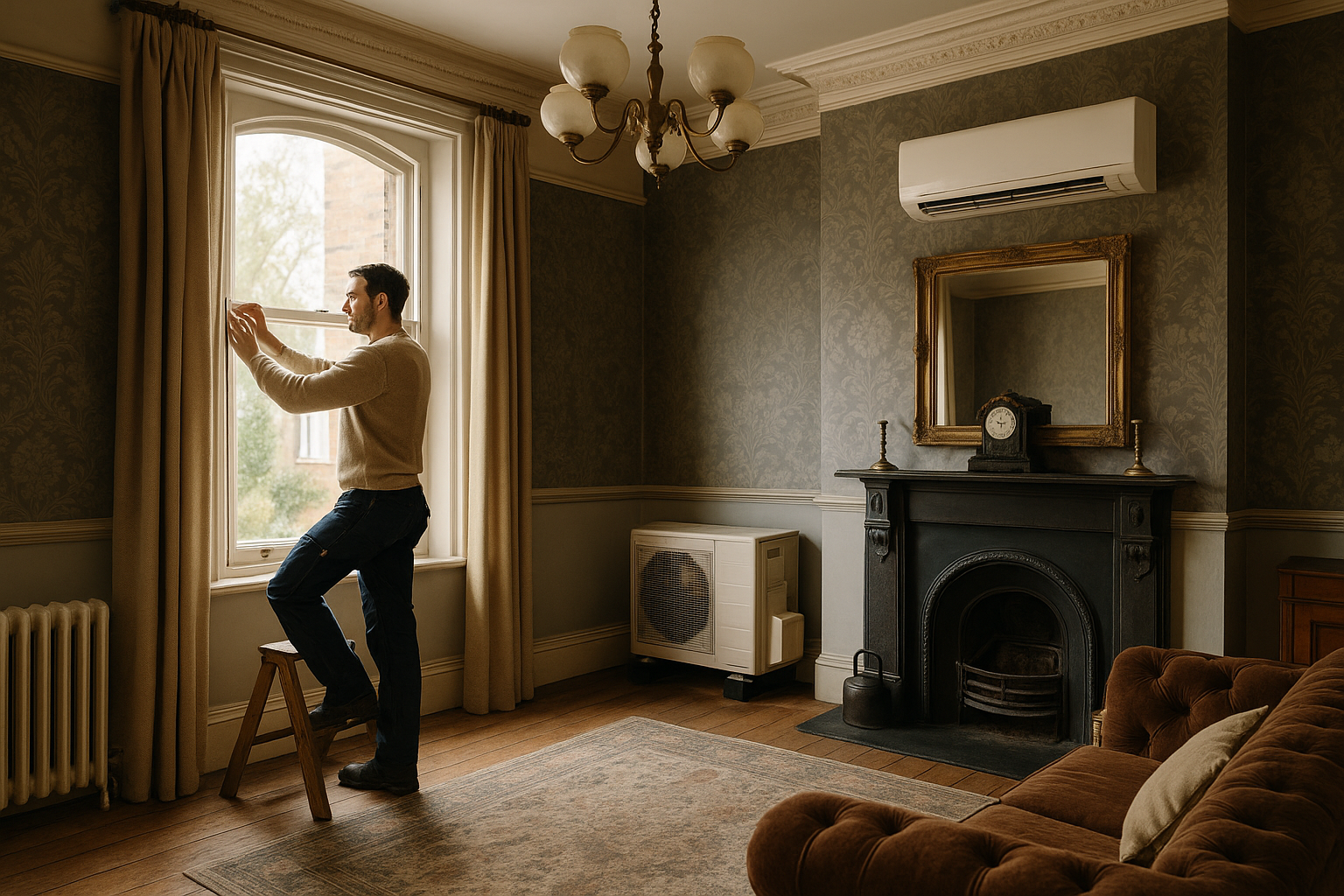
Victorian sash windows are beautiful but inefficient. Rather than replacing them, consider secondary glazing or draught-proofing kits.
Benefits:
- Preserves period aesthetics.
- Reduces draughts and noise.
- Often cheaper than full replacements.
If full replacement is necessary, opt for timber double-glazed sash windows that replicate the original design.
3. Insulate Floors
Traditional suspended timber floors can be insulated from below with breathable materials like hemp or wood fiber boards.
Pro tip: Avoid sealing floors completely—Victorian homes need to “breathe” to prevent dampness.
4. Upgrade Heating and Controls
Replace old boilers with modern condensing boilers or consider air-source heat pumps (if the property is well insulated).
Adding smart thermostats and zoned heating controls helps optimize energy use without major disruption.
5. Wall Insulation (with Care)
Victorian homes usually have solid walls, making insulation tricky.
Two main options:
- Internal wall insulation (IWI): Ideal for preserving external brickwork.
- External wall insulation (EWI): More effective but may alter the home’s appearance.
Always choose breathable materials and consult a conservation expert before installation.
What to Avoid: Common Mistakes in Energy Upgrades
1. Blocking Ventilation
Over-sealing a Victorian home can trap moisture, leading to damp, mold, and decay. Always maintain natural airflow through vents, chimneys, and breathable materials.
2. Using Non-Breathable Insulation
Modern insulation materials like foam boards can cause condensation and rot in period properties. Stick to natural, breathable alternatives.
3. Removing Original Features
Ripping out sash windows, fireplaces, or plaster mouldings can reduce your home’s character and value, so focus on preserving original features. Focus on repair and upgrade, not replacement.
4. Ignoring Professional Advice
Victorian homes vary widely in construction. Before making changes, consult:
- A conservation architect
- A heritage energy assessor
- Or a specialist builder familiar with period properties
They’ll help you choose upgrades that improve efficiency without damaging heritage features.
Bonus Tips for Sustainable Living in Victorian Homes
- Install LED lighting throughout.
- Use thick curtains or shutters to retain heat.
- Switch to a renewable energy supplier.
- Consider solar panels, ideally installed in discreet areas like rear roofs.
Balancing Efficiency and Heritage
Improving energy efficiency in Victorian homes is entirely possible—with the right approach. Focus on sympathetic, breathable, and reversible upgrades that protect the building’s character while lowering energy use.
With smart planning and expert advice, you can enjoy a warmer, greener, and more comfortable Victorian home without compromising its historic charm.