Exploring the history, ambiance, and restoration of lighting fixtures during the most dynamic era of interior design
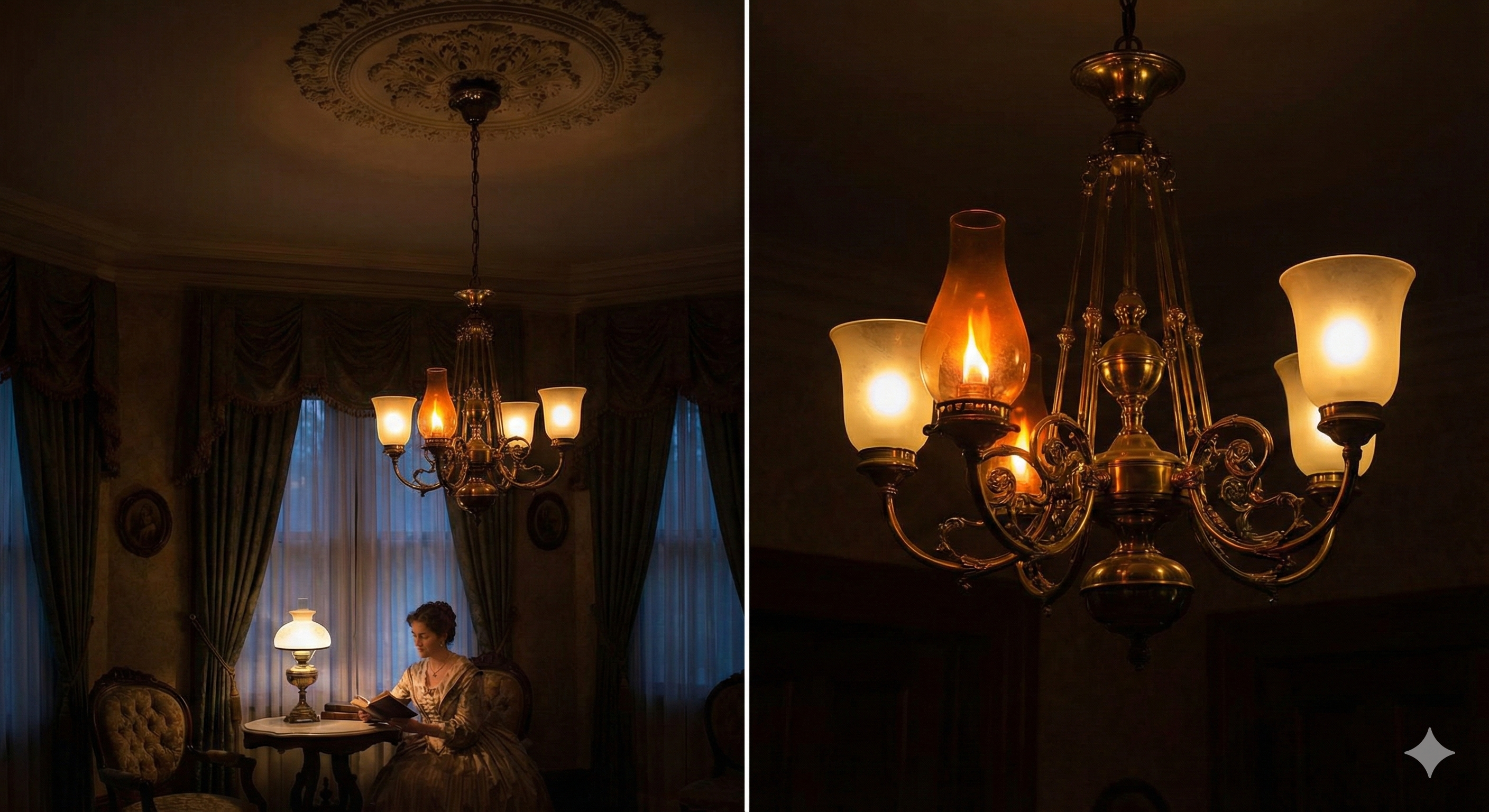
Imagine a late 19th-century parlor at twilight. The velvet curtains are drawn, and the room glows—not with the harsh wash of modern LEDs, but with a soft warmth that makes gilded frames sparkle and complexions appear porcelain-smooth.
At Victorian Restoration, our passion for preserving history goes beyond furniture and fine art frames, like those at our sister gallery Bedford Fine Art. We believe lighting is the jewelry of the home; it sets the mood, defines the space, and tells a story.
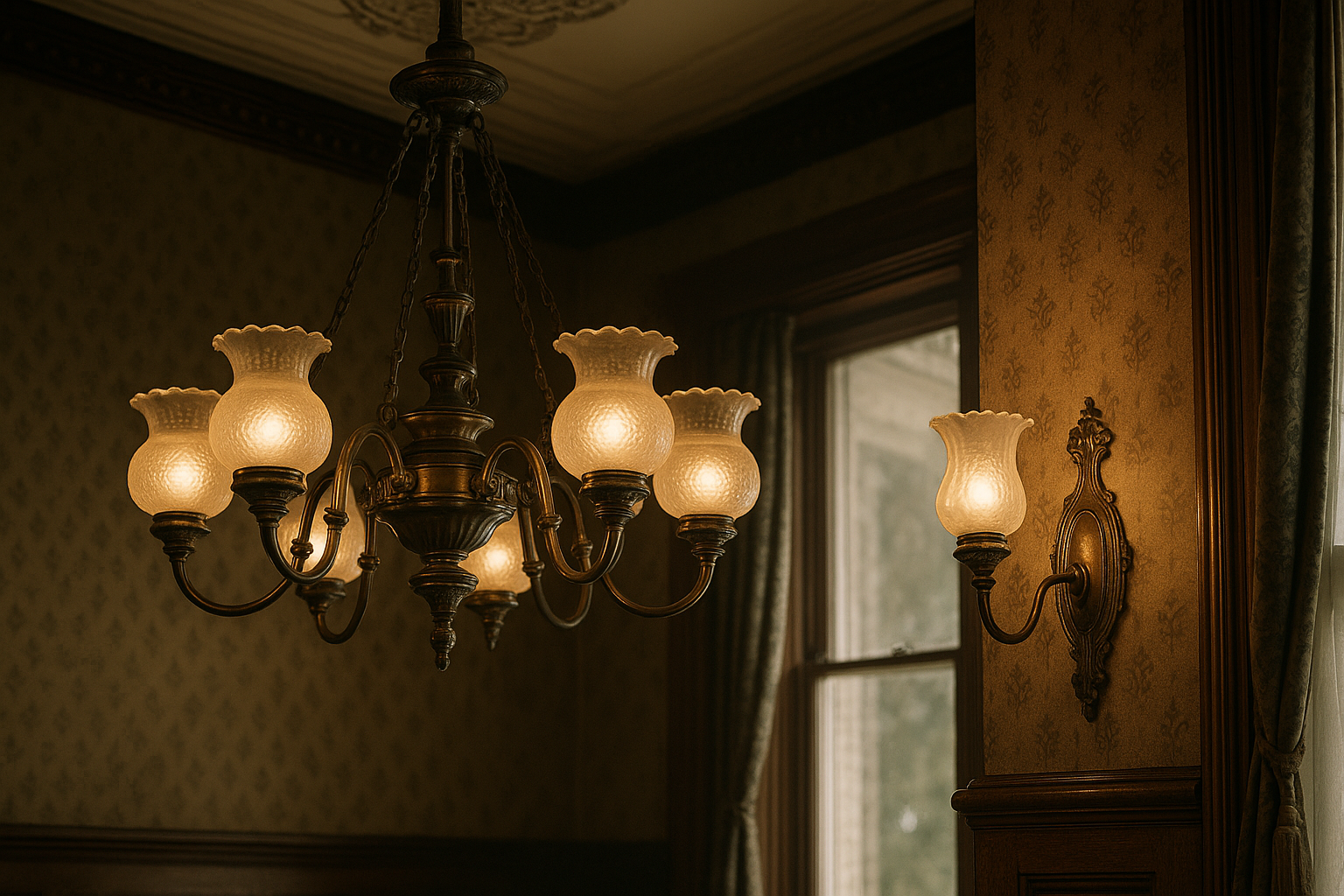
Perhaps the most fascinating story in lighting history is the forty-year "war of the lights," the transitional period between about 1880 and 1920, when gas lighting gave way to the electric bulb. Understanding this transition is key to capturing authentic "romantic lighting" in your period home and choosing the right fixtures to restore.
The Age of Gaslight: The "Living Flame"
Before electricity, the Victorian evening was illuminated by gas. It changed everything. Before gas, homes relied on candles and oil lamps, which created small pools of meager light. Gas piping allowed for central ceiling fixtures, called gasoliers, that could light an entire room.
The Aesthetic of Gas: Gaslight was undeniably romantic. It was a living, open flame, usually shaped like a fishtail or batwing. It flickered, cast long, dancing shadows, and produced a warm color temperature, much warmer than today’s soft white bulbs.
Victorian decor—rich wallpapers, heavy drapery, and dark woods—was designed to absorb the soot and smoke gas produced, but also to reflect its golden shimmer.
The Downsides: However, gas was far from perfect. It was hot, dirty, oxygen-depleting, and dangerous. Leaks caused explosions, and the open flames were a constant fire hazard in an era of voluminous fabric dresses. The world was ready for a change, even if it didn't know it yet.
The Electric Shock: A New Kind of Glow
When Thomas Edison commercialized the incandescent bulb around 1880, the public wasn't immediately sold. Early electricity was expensive and unreliable. Many Victorians found early electric light too steady, too stark, and lacking the soul of the living gas flame.
The Early Electric Aesthetic: It is a misconception that early electric light was bright white. Early carbon filament bulbs produced a dim, warm, orangey glow, not unlike a dying ember.
While cleaner and safer than gas, early electric fixtures, called electroliers, were often designed to look like gas fixtures to make consumers comfortable with the new technology. They featured exposed bulbs because the bulbs themselves were a novelty status symbol to be shown off, not hidden behind a shade.
The Transition Era: The Rise of the "Combination Fixture"
The most exciting period for antique lighting enthusiasts is the transition era, roughly 1890 to 1910. Homeowners were wary of relying solely on unreliable electricity, but they wanted its modern convenience.
The solution was the combination fixture.
These pieces of engineering featured both gas and electric light sources on the same fixture. You can easily identify them today:
- Gas Up, Electric Down: Typically, the gas jets pointed upward, often covered by frosted glass shades to diffuse the flickering flame, providing ambient room light. The electric sockets pointed downward, offering clearer, steadier light for reading or tasks.
- The Tell-Tale Keys: Look closely at the arms of an antique chandelier. If you see small turn-keys or valves on some arms but not others, you are likely looking at a combination fixture. Those keys were used to turn on the gas flow.
Choosing and Restoring the Right Fixture for Your Home
When curating lighting for a period home or trying to inject romantic ambiance into a modern space, authenticity matters.
If you are fortunate enough to own an original gas or combination fixture, you possess a piece of vintage light fixtures. But you cannot just hang it and turn it on.
The Danger of DIY: Original gas fixtures are piped with hollow tubing that once carried vapor. Early electric fixtures have wiring clothed in brittle cotton or silk that has long since degraded, posing a severe fire hazard.
The Victorian Restoration Approach: Restoring these fixtures requires a delicate balance of preservation and modernization, including restoring electrical wiring.
- Electrification of Gas: We painstakingly convert pure gas fixtures into safe electric ones. This involves running modern, safety-rated wires through the complex, often curved tubing originally designed only for gas. It is a highly specialized skill.
- Rewiring Combination Fixtures: We replace all rotten wiring in combination fixtures, ensuring they meet modern safety codes while retaining their original configurations.
- Preserving the Patina: The romance is lost if an antique brass fixture is stripped and polished to look brand new. We specialize in cleaning fixtures to remove grime while preserving the aged patina that took a century to develop.
- The Right Bulb: Finally, the romantic look relies on the bulb. We advise against modern LEDs that are too cool or bright. To replicate the gas or carbon-filament look, we recommend warm-spectrum Edison-style LEDs that mimic the historic, golden glow without the heat.
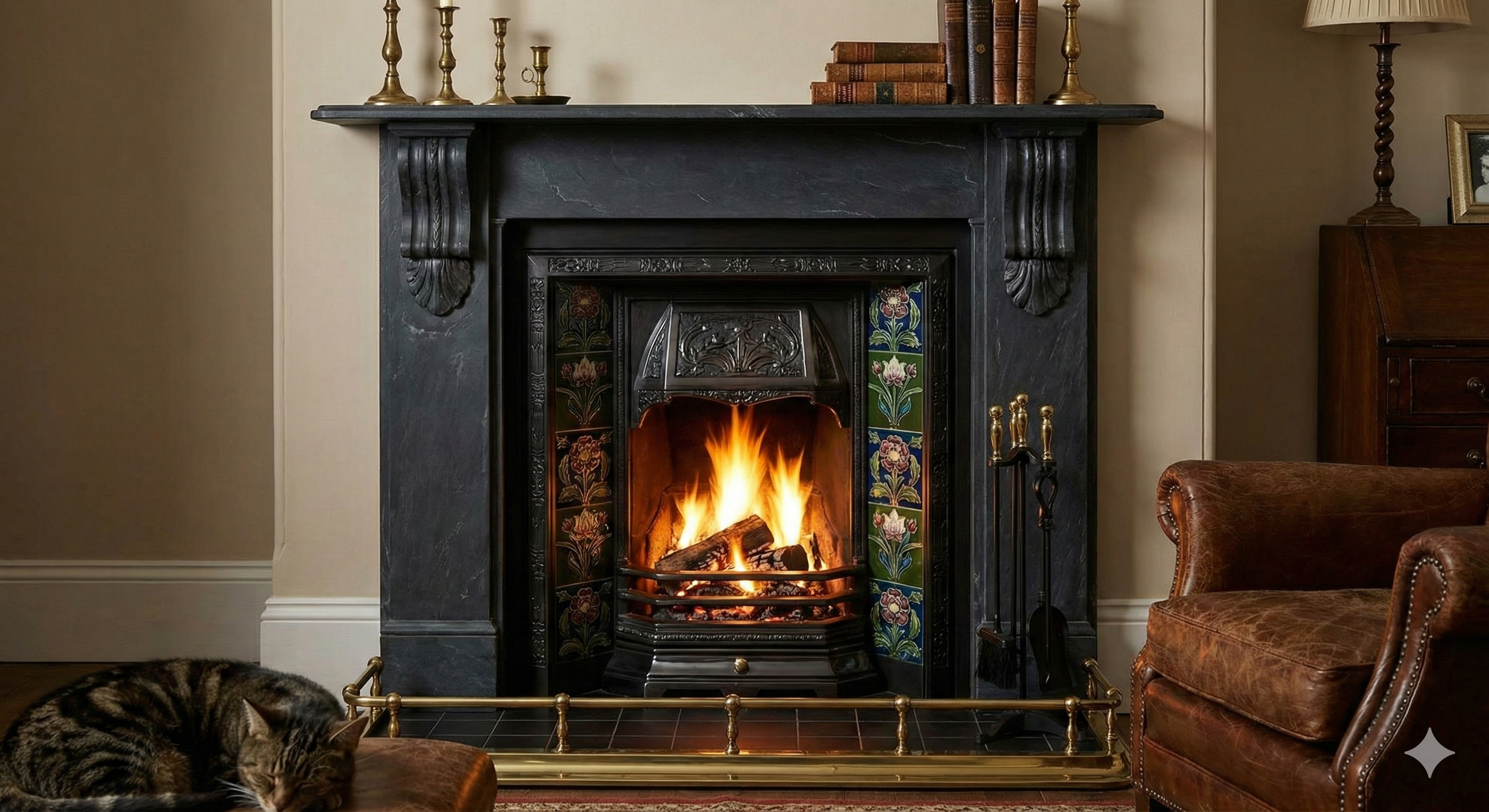
The transition from gas to electric was more than a technical upgrade; it changed how people lived, worked, and saw their own homes. By choosing authentic fixtures and investing in professional, historically sensitive restoration, you aren't just lighting a room; you're preserving a piece of history, much like original Victorian fireplaces. You are rekindling the romance of a bygone era.
If you have a family heirloom chandelier, a gasolier found at an estate sale, or a combination sconce that needs new life, contact Victorian Restoration today. Let us safely bring the warm glow of history back into your home.