Restoring a Victorian home requires dedication, and selecting the right paint color can be particularly challenging. While the era is often linked to muted browns or the vibrant "Painted Ladies" of San Francisco, Victorian color theory is much more nuanced.
This guide will help you select historically accurate interior palettes that respect your home’s heritage.
The Philosophy of Victorian Color
In the 19th century, color choices reflected both function and social status. Victorians saw the home as a transition from public life to private sanctuary.
- The Three-Zone Rule: Rooms were typically classified as Public (entryways, parlors), Masculine (libraries, dining rooms), or Feminine (bedrooms, morning rooms).
- The Impact of Industrialization: Early Victorian colors used natural pigments such as ochre and terracotta. By the late 1800s, synthetic aniline dyes introduced brighter greens, purples, and blues.
Choosing Your Palette by Era
"Victorian" refers to a period spanning more than 60 years, during which design preferences changed significantly.
1. Early Victorian (1837–1850)
The early years favored Neo-Classical restraint, with soft, stone-inspired colors reminiscent of Greek and Roman architecture.
- Key Colors: Dove gray, pale fawn, lavender, and muted straw.
- Best suited for small cottages or homes with delicate moldings.
2. High Victorian (1850–1870)
This era emphasized richness and drama. Influenced by the Gothic Revival, colors became deeper and more saturated to reflect prosperity.
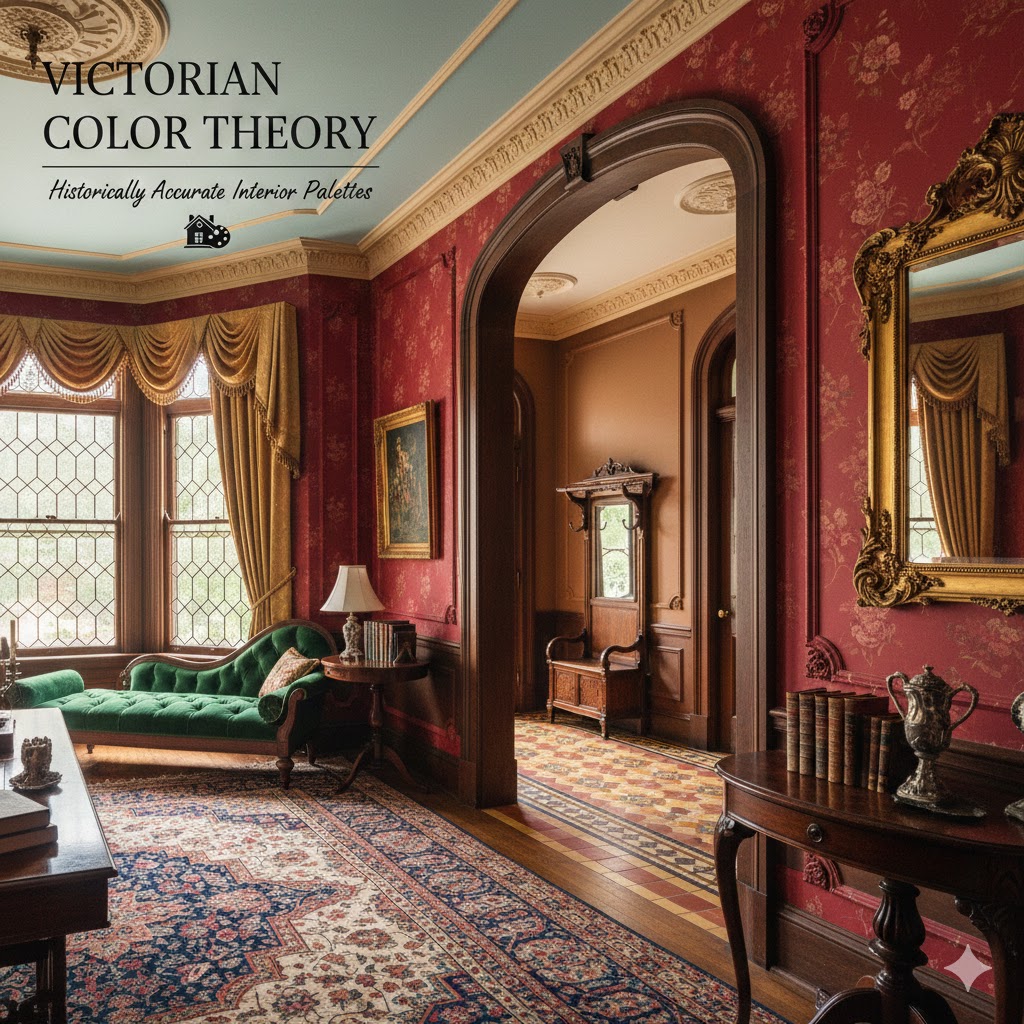
- Key Colors: Crimson, forest green, deep gold, and royal blue.
- Best suited for formal dining rooms and grand entryways.
3. Late Victorian & Aesthetic Movement (1870–1900)
By the end of the century, the "Tertiary" palette emerged. Homeowners shifted from primary colors to more complex, muted shades inspired by nature.
- Key Colors: Peacock blue, terracotta, olive green, and sunflower yellow.
- Best suited for Queen Anne or Stick-style homes.
Room-by-Room Guide
The Entryway & Hallway
These areas served as transition spaces. To separate the dusty street from the clean interior, Victorians often chose dark, durable colors such as chocolate brown or deep umber. This contrast made the adjoining parlors appear lighter and more open.
The Parlor (The Showpiece)
As the most public room, the parlor featured the most expensive pigments. Burgundy and gold were common choices, selected to appear impressive under gaslight or candlelight.
The Dining Room
Victorians believed deep colors aided digestion and created a stately atmosphere. Forest green or navy blue paired with oak wainscoting was the preferred look for dining rooms.
Modern Tips for Historical Accuracy
You do not need to create a dark, museum-like environment to achieve historical accuracy. Here are ways to adapt these guidelines for modern living in 2026:
- The Finish Matters: Use flat or eggshell finishes for walls. High gloss finishes were uncommon and typically reserved for trim.
- The "Tertiary" Trick: If deep red seems overwhelming, consider a muted version. Adding a touch of gray or brown to any color creates a more authentic 19th-century appearance.
- Do not overlook the ceiling. Victorians rarely left ceilings stark white. Use pale cream, sky blue, or a lighter shade of your wall color.
Pro Tip: Before purchasing paint, review the "Historical Collection" lines from major brands. These collections are formulated to closely match 19th-century pigments.