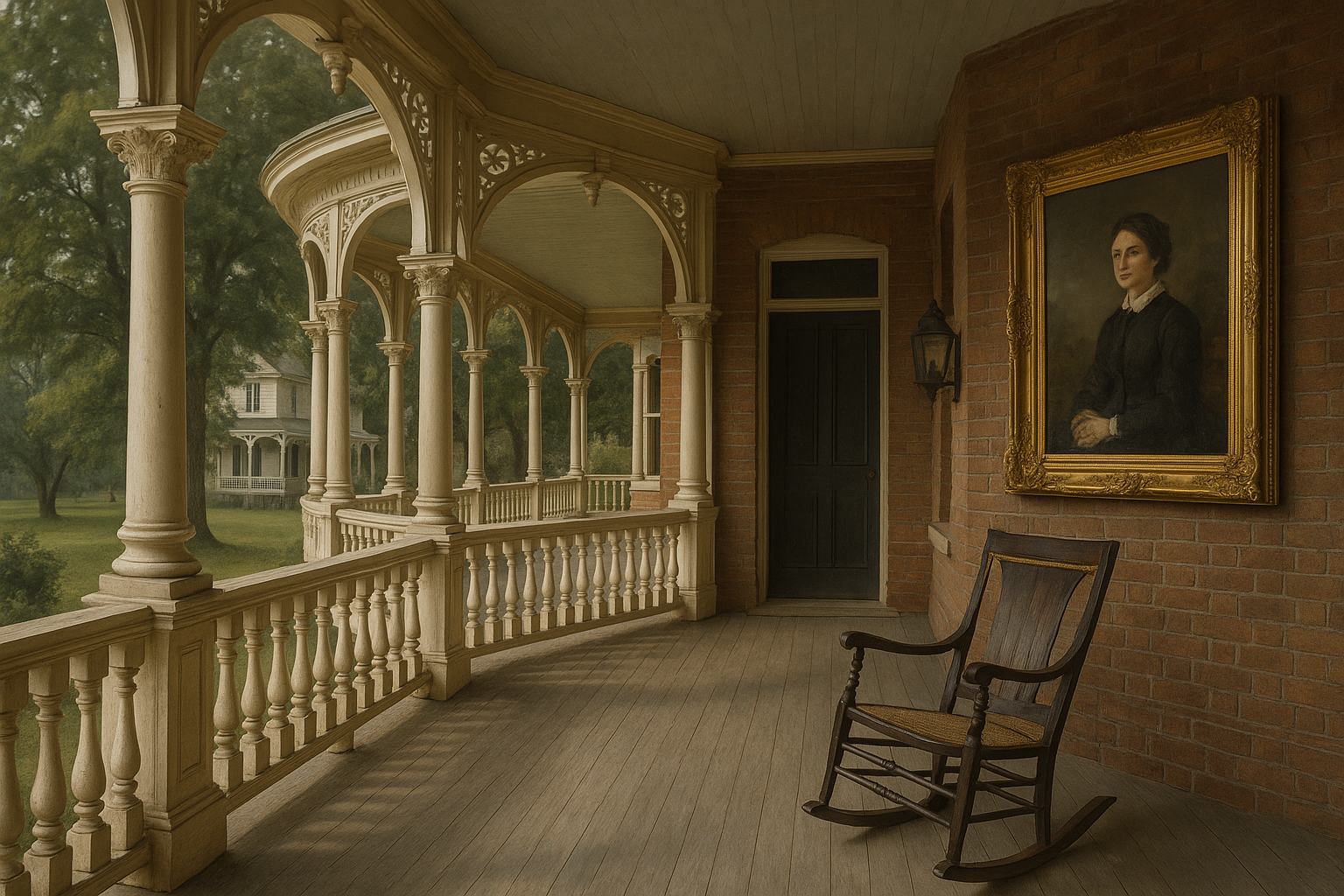
Few architectural elements are as welcoming or iconic as the Victorian front porch. It bridges neighborhood and home, historically offering relief from heat, opportunities to socialize, and a showcase for intricate "gingerbread" woodwork.
But a century or more of rain, snow, and sun takes a toll. Historic homeowners are likely familiar with the two greatest enemies of the Victorian porch: wood rot and missing or damaged spindles.
As you approach porch restoration, remember—this is about more than curb appeal; it’s your opportunity to protect history while welcoming the future. Let’s break down the steps to address rot and revive the spindles that give your Victorian porch its unique character, including restoring Victorian porches.
Step 1: The Hunt for Wood Rot
Before painting or decorating, ensure the bones of your porch are solid. Water is the nemesis of 19th-century millwork, pooling on horizontal surfaces and wicking into the end-grain of wooden posts.
How to spot it: Use a screwdriver or awl to gently poke the most vulnerable areas. Check the bases of porch columns, bottom rails of balustrades, edges of floorboards, and stair treads. If the wood feels spongy or crumbles with gentle pressure, you have rot.
How to fix it:
- Minor Rot (The Epoxy Rescue): You don't have to discard a 130-year-old piece of old-growth wood because of a soft spot. For localized rot, wood consolidants (liquid products that strengthen decayed wood fibers) and two-part epoxy fillers are a restorer’s best friend. First, remove the decayed wood until you reach solid material. Coat the area with a liquid consolidant to harden the remaining fibers, then mold the epoxy filler to match the original profile. Once cured, it can be sanded, primed, and painted like wood.
- Major Rot (The Dutchman Repair): If a column base or a large section of a rail is entirely rotted, you’ll need to cut it out. A "Dutchman" repair, a technique in which a damaged section is removed in a neat, geometric shape and replaced with a precisely cut patch of matching new wood, involves cutting away the diseased wood and gluing in the new piece.
- Replacement: When replacing floorboards or rails, avoid modern pressure-treated pine as it tends to warp and doesn't hold paint well. Choose naturally rot-resistant woods like mahogany, vertical-grain Douglas fir, or cedar.
Step 2: Saving the Spindles (Balusters)
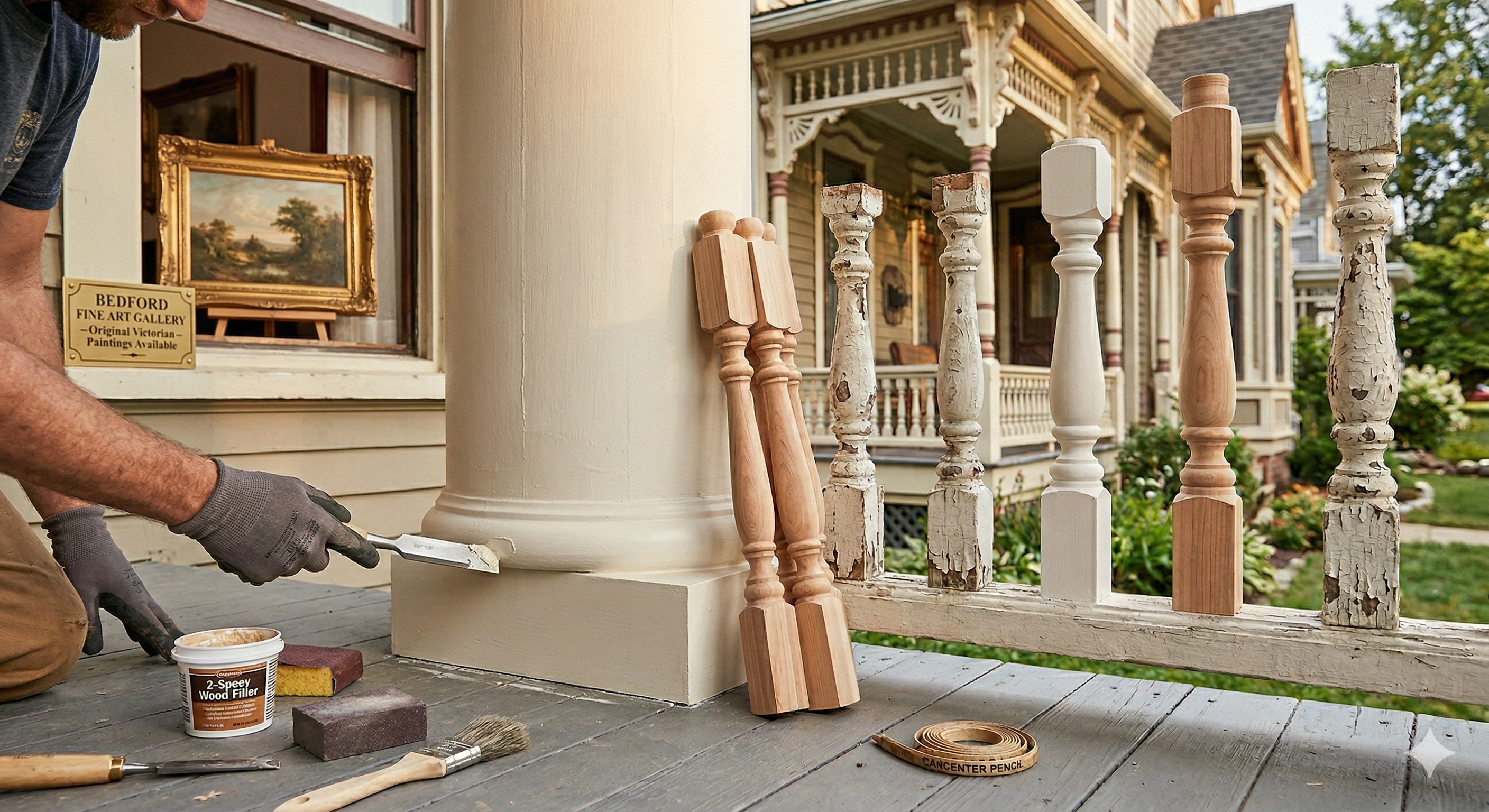
The spindles (technically balusters, which are the vertical posts supporting the handrail) are the jewelry of the Victorian porch. They give the home rhythm, texture, and personality. Over decades, these beautifully turned pieces often get dozens of paint coats, causing them to lose their crisp, intricate details. Worse, individual spindles often break or go missing.
Stripping Paint: If spindles appear lumpy, stripping is needed. For homes built before 1978, use safety gear and lead-safe methods with chemical strippers or low-heat infrared guns. These reveal the original wood’s sharp details.
Replicating Missing Spindles: It is common to find Victorian porches where a few spindles have been replaced with mismatched, store-bought 2x2s. To restore the authentic look, you need exact replicas.
- Remove a survivor: Carefully remove one of your best-condition original spindles to use as a template.
- A woodworker can use the original as a template to make precise replacements from cedar or mahogany.
- When reinstalling, prime the entire spindle—especially the ends—before fastening. This prevents water absorption and rot.
After curing epoxy, finishing spindles, and applying period paint, your home shines as a 19th-century masterpiece. Victorian restoration goes beyond the porch. The restored exterior should set the tone for an equally authentic interior. To truly reflect the era indoors, add period artwork. Bedford Fine Art Gallery offers original Victorian paintings, including landscapes, genre scenes, and still lifes. Authentic artwork bridges your exterior restoration and interior aesthetic, adding Victorian integrity. Our home is a true time capsule of Victorian elegance.
The Reward of Restoration
Restoring a Victorian porch takes dedication, but it preserves your home's history and soul, much like restoring porches and balconies. By repairing rot, restoring spindles, and restoring woodwork and trim, you become a true steward of architectural heritage.
Pick up your tools and bring your porch back to life. Your home and neighbors will thank you.