Restoring a Victorian "Painted Lady" requires thorough historical research. These homes, known for elaborate millwork, asymmetric facades, and multi-color schemes, demand an evidence-based approach to exterior painting. Guesswork often results in historical inaccuracies. Authentic restoration depends on primary source analysis, architectural stratigraphy, and art historical research to accurately revive 19th-century color palettes.
Archival Research and Paint Stratigraphy
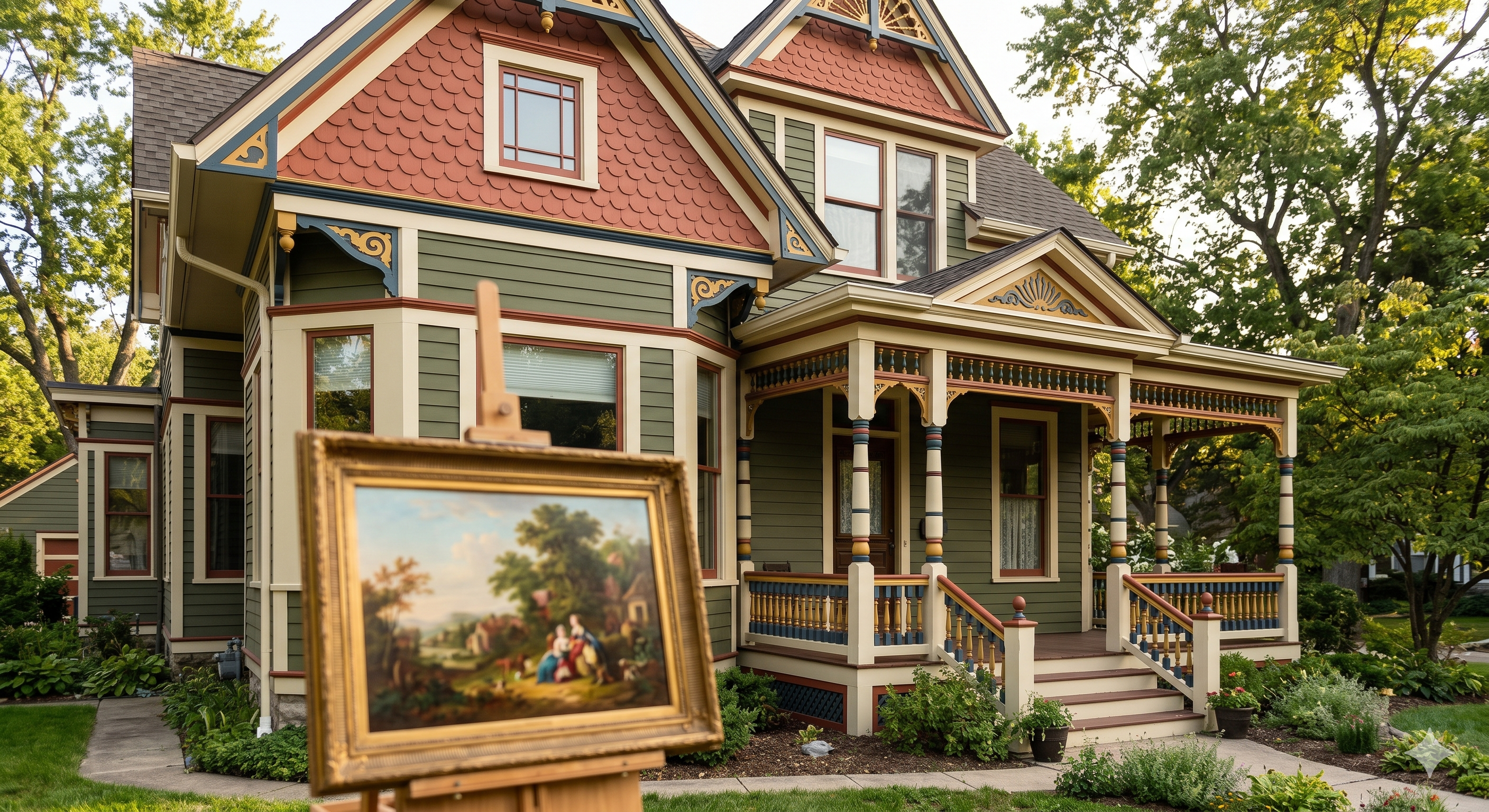
In the Victorian era (circa 1860–1900), mass-produced, pre-mixed synthetic paints introduced a wide range of colors. Classic "Painted Ladies" used three to five contrasting colors to emphasize features such as corbels, spindles, and fish-scale shingles.
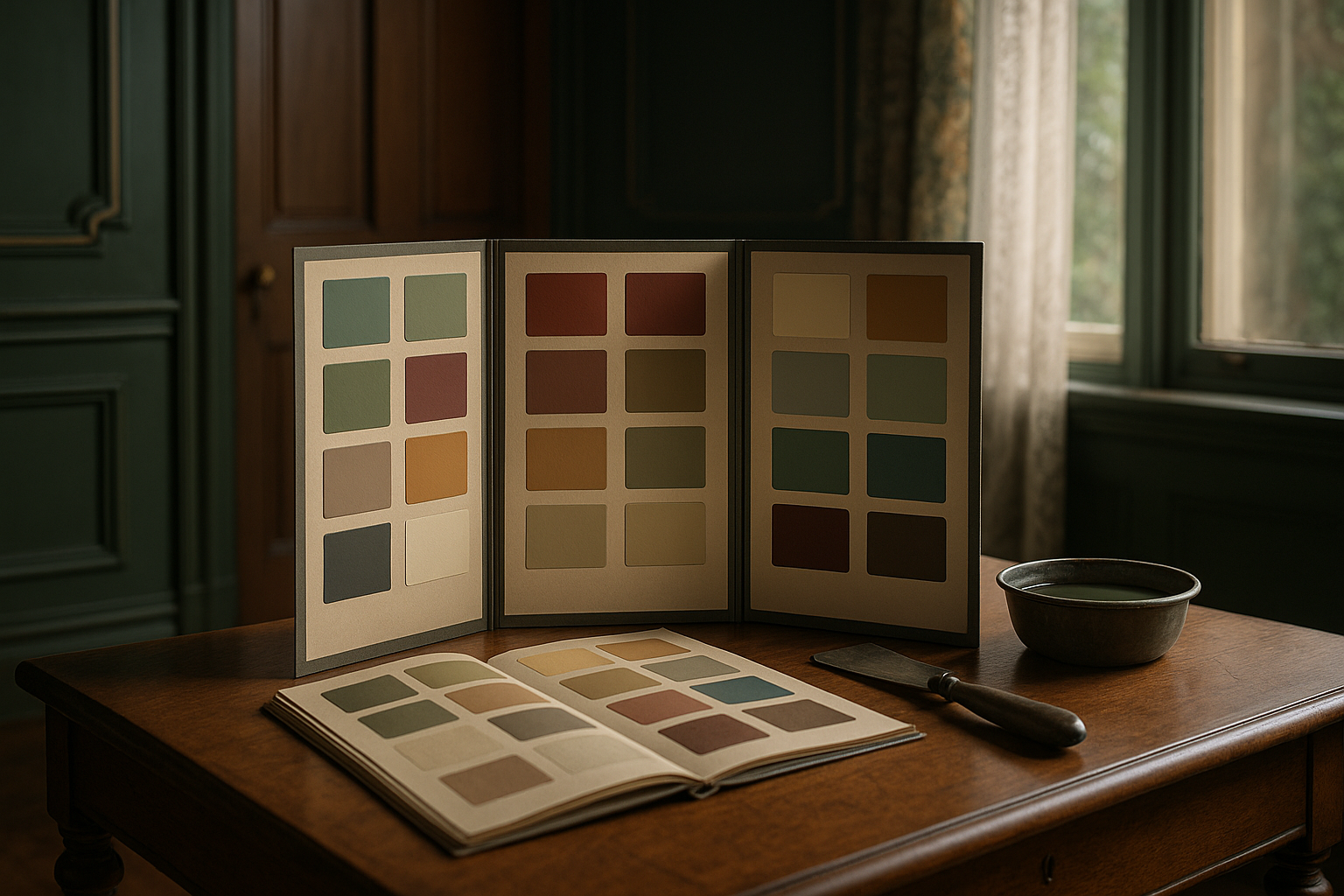
A faithful restoration begins with chronostratigraphy, which involves carefully scraping and analyzing existing paint layers to identify the original coat. Cross-reference these findings with local historical archives, builder’s pattern books from the 1880s, and period paint catalogs to confirm the chemical and visual accuracy of the colors.
Primary Source Material: Original Victorian Paintings
Physical paint analysis and archival records provide essential data but often lack visual context. Nineteenth-century photographs offer structural details but, being monochromatic, do not capture the original color schemes.
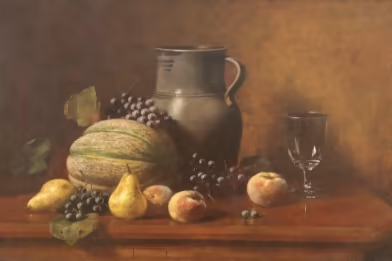
Art historical research is essential at this stage. Original 19th-century paintings serve as valuable primary sources.
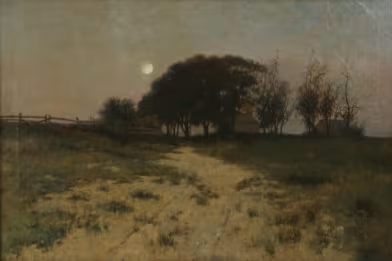
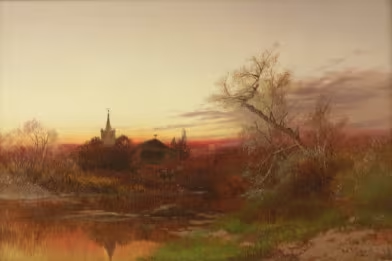
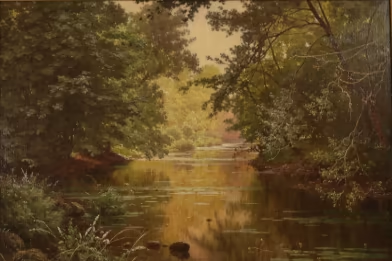
Analyzing original Victorian paintings allows researchers and homeowners to see authentic color schemes as they appeared in their time. Artists documented tonal contrasts on trims, the effect of light on earth-toned sidings, and the period’s true aesthetic. These artworks offer clear evidence of Victorian color theory in practice.
For authentic restoration, Bedford Fine Art Gallery provides a curated selection of original 19th-century artwork. Including these pieces in your research helps ensure your exterior color choices are historically accurate.
Strategies for Multi-Color Application
After completing archival and art historical research, apply a structured methodology to the exterior:
- Establish the Body Color First: Use period research to select a historically accurate base tone, such as rich earth tones, deep olives, or muted ochres, to anchor the home.
- Define the Trim: The trim color should frame the structure. Research shows that 19th-century builders often used darker trims with lighter bodies, or lighter trims with darker bodies.
- Accentuate the Details: Reserve third and fourth colors for architectural embellishments. Refer to original Victorian landscape and genre paintings to observe how artists highlighted window sashes, gable brackets, and spindle work.
- Contextualize with the Environment: Choose a palette that respects the home’s historical context and natural surroundings. Avoid modern neon or high-gloss finishes, which do not reflect 19th-century pigment capabilities.
The Final Touch of Authenticity
A true Victorian restoration goes beyond the exterior. After carefully researching and applying your "Painted Lady" palette, ensure the interior also reflects historical accuracy. Acquiring an original 19th-century painting from Bedford Fine Art Gallery completes your research and brings a museum-quality primary source into your restored home.
Explore Bedford Fine Art Gallery’s collection to ground your restoration project in verifiable art historical research.