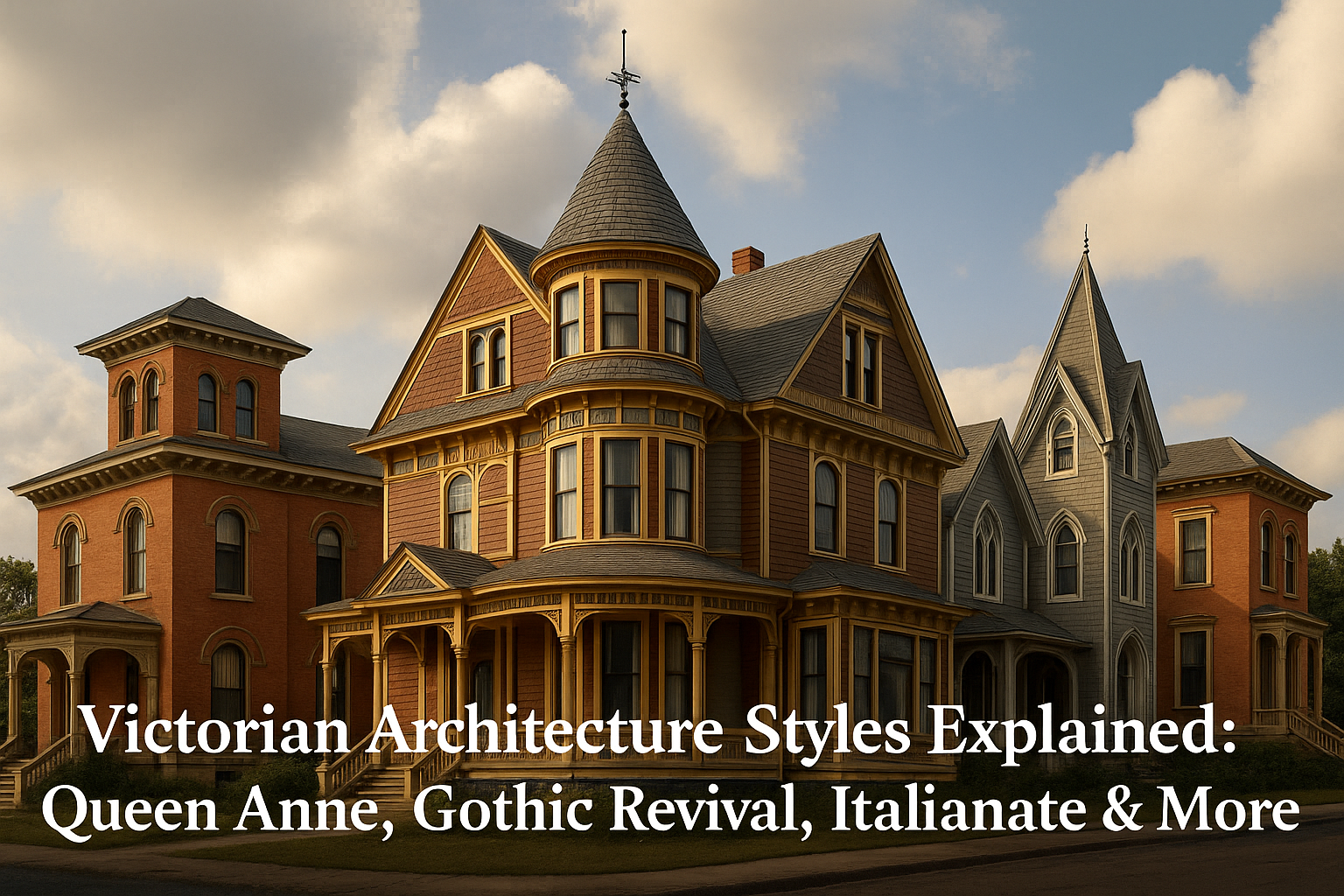
If you walk through a historic neighborhood, you might hear the term "Victorian" used as a catch-all for every old house built between 1837 and 1901. But for the true restoration enthusiast, "Victorian" isn't a single style—it is an era that encompasses a wild variety of architectural movements.
Restoring a home begins with understanding what it is. A color palette that sings on a Queen Anne might look garish on a solemn Gothic Revival. To help you read the history written in your home’s wood and brick, we are putting the spotlight on the "Big Three" of the Victorian era: Gothic Revival, Italianate, and Queen Anne.
1. Gothic Revival (approx. 1840–1880)
The Romantic Storybook Cottage
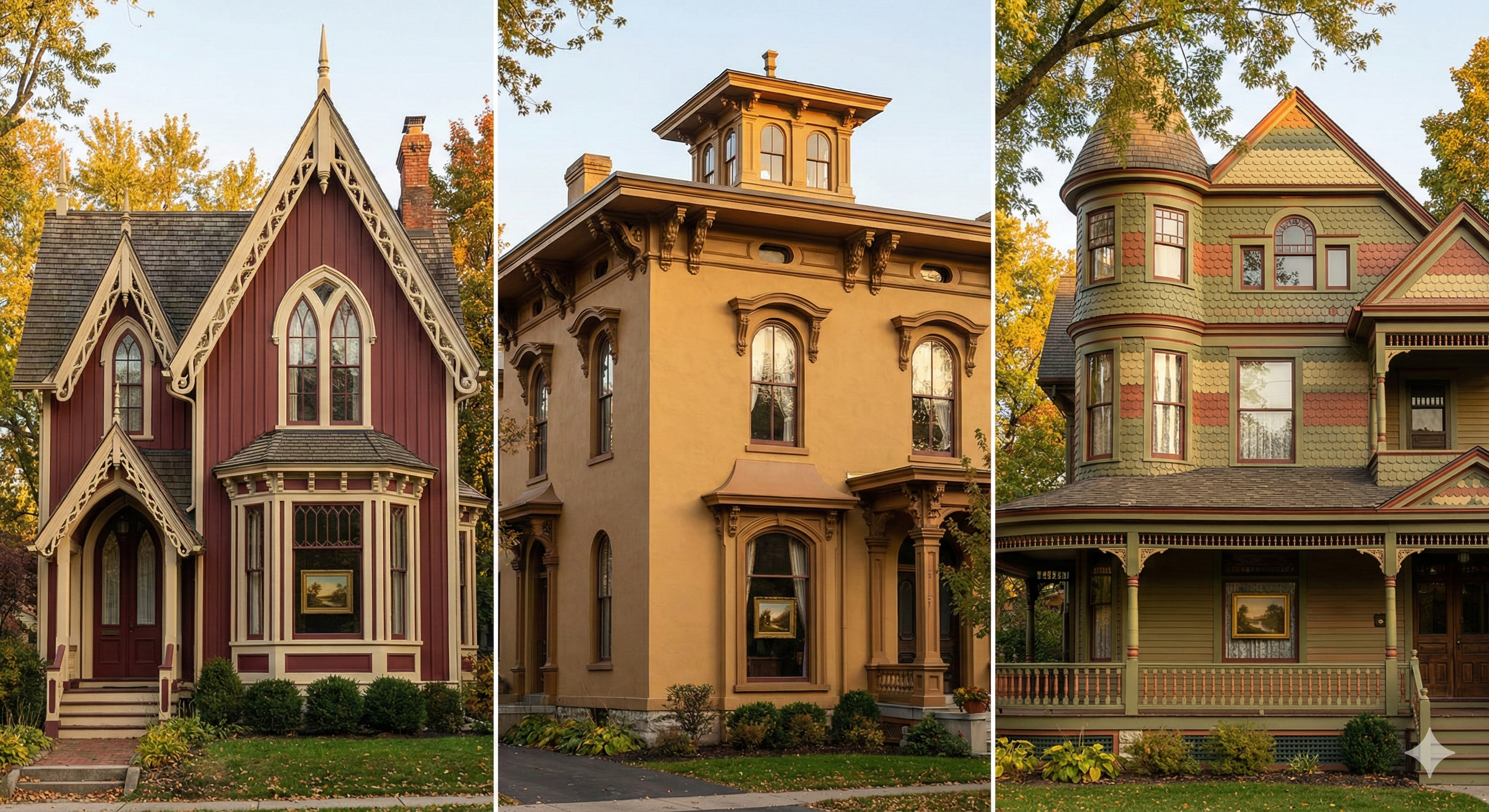
Inspired by the medieval cathedrals of Europe, Gothic Revival homes were a reaction against the balanced, rational styles of the previous Greek Revival era. These homes focus on verticality and picturesque details. If your home looks like a miniature church or a fairytale cottage, it’s likely Gothic Revival.
Key Identifiers:
- Pointed Arches: The giveaway feature. Look for "lancet" windows that come to a sharp point at the top.
- Steeply Pitched Roofs: Steep cross-gables are essential to the style.
- Vergeboard (Gingerbread): Ornate, carved wood trim decorating the gables. This is often referred to as "Carpenter Gothic" when applied to wooden homes.
- Board-and-Batten Siding: Vertical wooden siding meant to draw the eye upward.
2. The Italianate (approx. 1840–1885)
The Elegant Villa
While Gothic Revival looked to medieval churches, the Italianate style looked to the sprawling villas of the Italian countryside. This was an incredibly popular style in America because it was flexible—it could be a modest square townhouse or a sprawling mansion.
Key Identifiers:
- Low-Pitched Roofs: Unlike the sharp Gothic peaks, these roofs are nearly flat or have a very low slope.
- Decorative Brackets: This is the tell-tale sign. Look under the wide overhanging eaves (cornices) for large, decorative corbels or brackets, often arranged in pairs.
- Tall, Narrow Windows: Often rounded at the top (arched) and featuring decorative "hoods" or pediments above them.
- Square Cupolas or Towers: Many high-style Italianate homes feature a central square cupola or an off-center tower.
3. Queen Anne (approx. 1880–1910)
The "More is More" Masterpiece
When people dream of a quintessential Victorian home, they usually picture the Queen Anne. Emerging later in the era, this style is characterized by asymmetry and an explosion of textures. It rejected smooth walls in favor of variation and visual excitement.
Key Identifiers:
- Asymmetry: There is rarely a center focal point. The facade is intentionally unbalanced.
- Corner Turrets and Towers: Round or polygonal towers are a staple of the style.
- Wrap-Around Porches: Expansive porches, often featuring turned posts and spindlework (Eastlake detailing), are essential in restoring porches and verandas.
- Textural Variety: A mix of materials is common—patterned wood shingles (fish scales), clapboard, brick, and stone all on the same house.
Completing the Restoration: The Interior Narrative
Identifying the architectural shell of your home is step one. Step two is curating an interior that respects that history. Nothing disrupts the immersive experience of a restored Victorian home faster than mass-produced, modern "big box store" art on the walls.
To truly honor the era of your Gothic Revival, Italianate, or Queen Anne home, authenticity is key in Restoring Victorian houses.
The Bedford Fine Gallery Difference
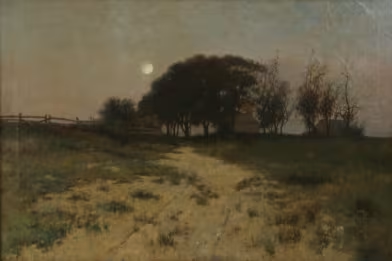
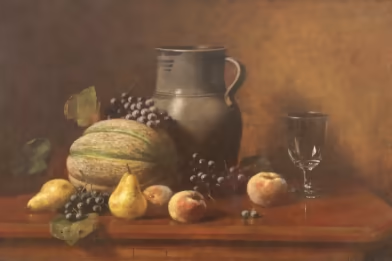
For homeowners looking to bridge the gap between architectural restoration and interior design, we recommend visiting Bedford Fine Gallery. Specializing in 19th-century fine art, they offer a curated collection of original paintings that were created during the very decades your home was built.
Imagine hanging a genuine Hudson River School landscape in your Italianate parlor, or a moody, romantic oil painting in your Gothic Revival library. These aren't reproductions; they are original pieces of history that carry the same soul and provenance as the home you are restoring.
- For the Italianate: Look for their pastoral landscapes that mirror the "country villa" aesthetic.
- For the Queen Anne: Explore their vibrant genre paintings or floral still lifes that match the eclectic, colorful energy of the architecture.
Visit Bedford Fine Gallery today to browse their current catalog of original Victorian fine art.