When restoring a Victorian home, attention often focuses on architectural details such as historic paint colors, authentic Eastlake hardware, and intricate woodwork. At Bedford Fine Art Gallery, we believe a complete Victorian restoration extends beyond the front porch. The surrounding landscape serves as a living frame for your home.
To authentically restore a Victorian property, it is important to include Victorian gardens philosophies of the era alongside interior and exterior architectural details. The 1880s, part of the High Victorian period, were marked by vibrant and innovative horticultural styles. Below are key garden designs and plants from the 1880s, as well as ways to blend these period elements into modern landscapes.
The 1880s Garden Philosophy: The "Gardenesque" Style
Before the Victorian era, wealthy estates preferred naturalistic landscapes. By the 1880s, the Industrial Revolution had transformed gardening. The mechanical lawnmower made manicured lawns accessible to the middle class, while improved glasshouse heating enabled mass propagation of exotic plants.
This shift led to the "Gardenesque" style, which emphasized botanical variety and human control over nature. Gardens became designed spaces, serving as status symbols that reflected a homeowner’s wealth and artistic taste.
Key Design Elements of the 1880s Landscape
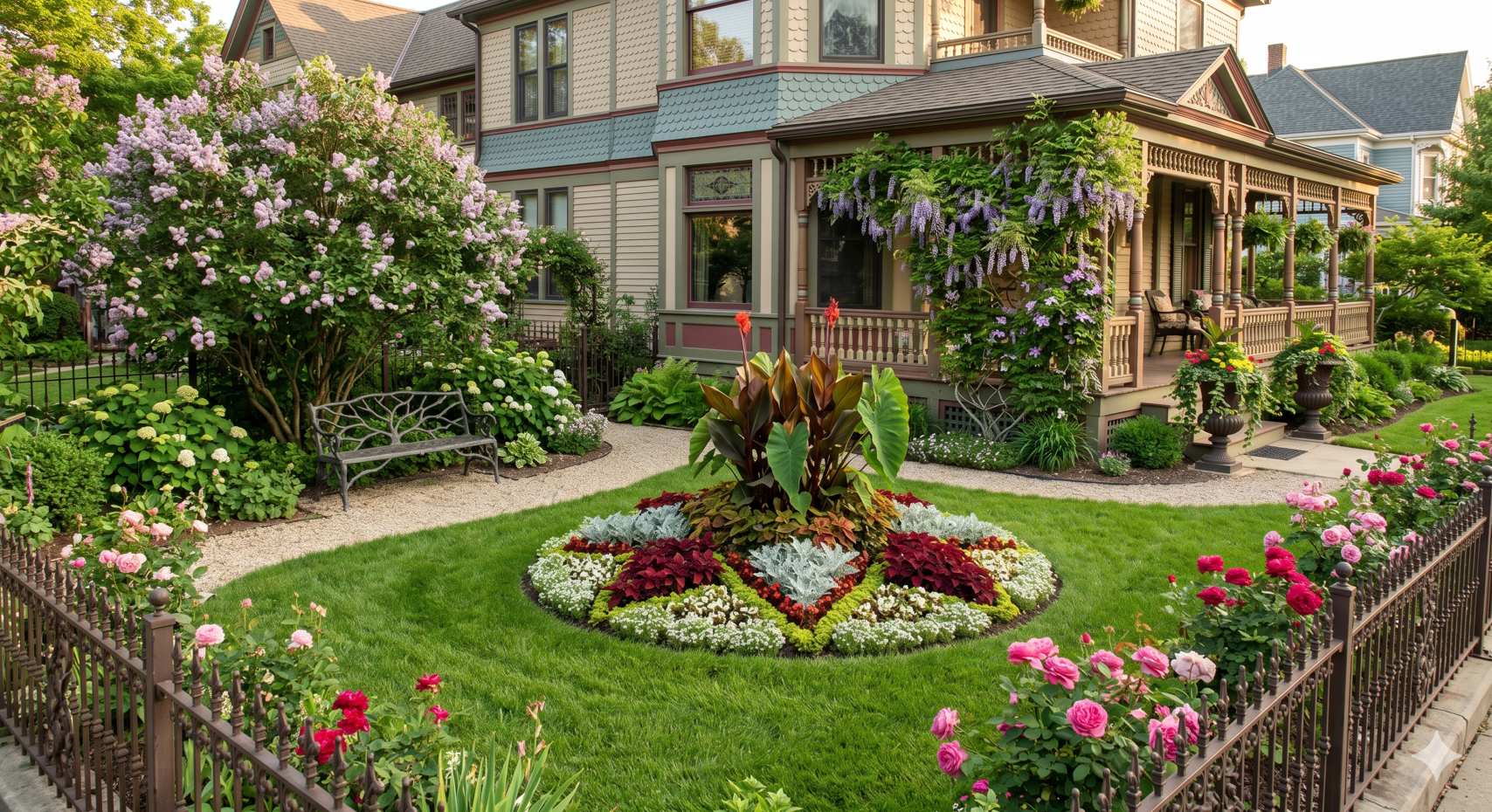
1. Carpet Bedding (Mosaiculture): The defining feature of 1880s landscapes was carpet bedding. Gardeners arranged low-growing, colorful plants in intricate geometric patterns, resembling woven carpets or mosaics. Designs included circles, stars, crescents, and family initials, set into manicured lawns and filled with contrasting foliage.
2. The Immaculate Lawn. The front lawn, as we know it, is. The Immaculate Lawn: The front lawn became a cultural staple in this era. Affordable push-mowers enabled homeowners to maintain smooth, green lawns that highlighted both carpet beds and the home's architecture. The foundation plantings obscuring the base of the house are largely a 20th-century invention; the 1880s saw the gentle beginning of this trend. Victorians began using vines and strategically placed shrubs to soften the transition between the home's heavy masonry and the lawn.
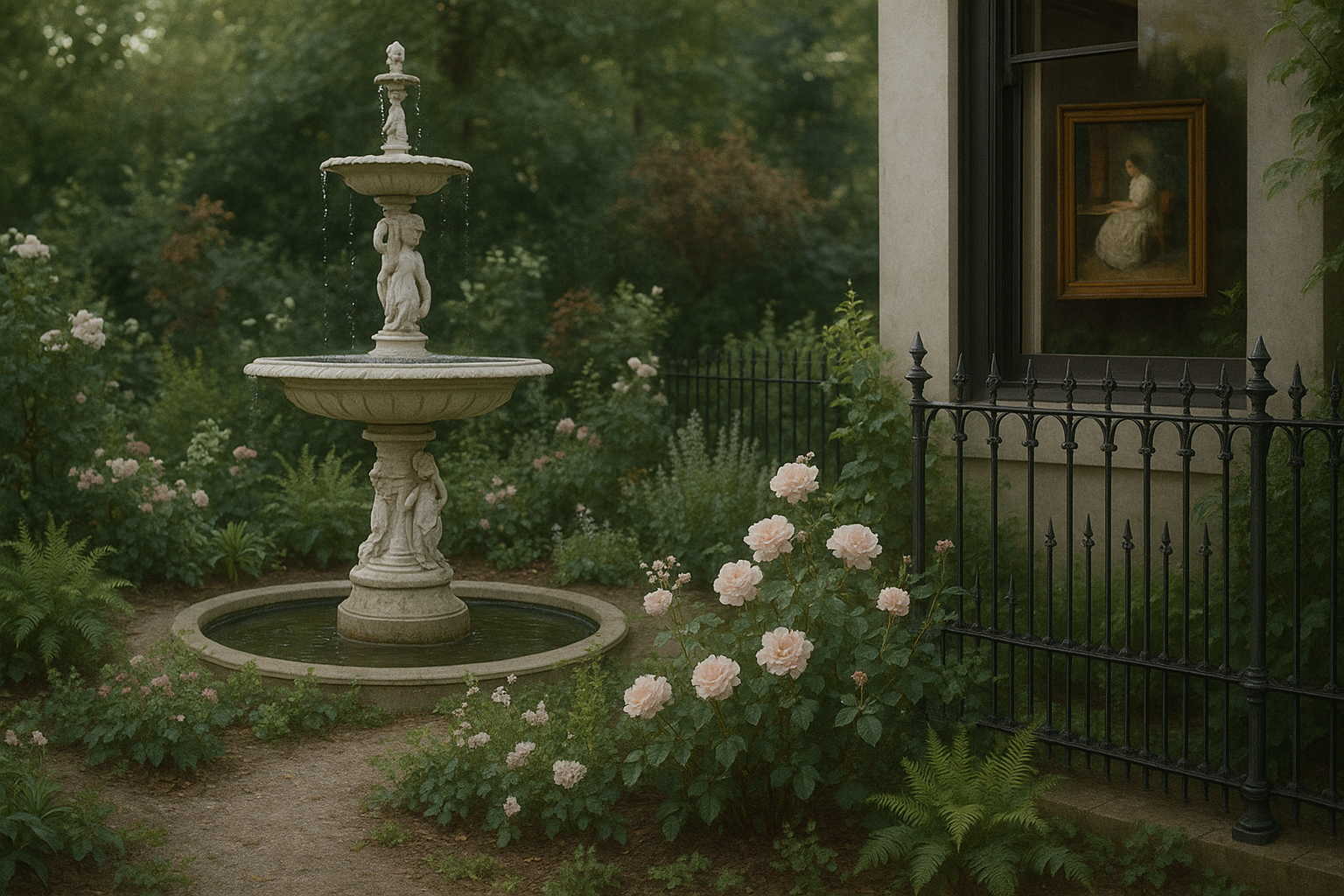
4. Ornaments and Hardscaping: Garden ornamentation was highly valued. Popular features included cast-iron benches, classical stone urns with trailing vines, sundials, birdbaths, and wooden gazebos. Wrought iron or cast-iron fences often bordered properties, providing security and displaying wealth.
Popular Plants of the 1880s
To evoke the 1880s horticultural palette, select plants with bold colors, exotic forms, or a sense of lasting romance.
- Foliage and Bedding Plants: For carpet bedding, Victorians used Coleus, Dusty Miller for silver contrast, Sweet Alyssum, and Wax Begonias. Cannas and Elephant Ears often served as tall focal points in circular beds.
- Vines and Climbers: The Victorian style favored vines on trellises or brickwork. Wisteria, Clematis, English Ivy, and Morning Glories were common choices.
- Shrubs: Lilacs (Syringa), Hydrangeas (especially mophead varieties), Bridal Wreath Spirea, and Mock Orange were valued for their fragrance and abundant spring and summer blooms.
- Trees: The Weeping Willow symbolized Victorian sentimentality. In milder climates, the Monkey Puzzle Tree served as an exotic centerpiece on the front lawn.
- Heritage Roses: Roses were essential in Victorian gardens. The 1880s favored heavily scented, double blooms such as Bourbon Roses ('Zephirine Drouhin') and Hybrid Perpetuals ('Baronne Prevost' or 'Ferdinand Pichard'), rather than modern Hybrid Teas.
Adapting the 1880s Landscape for Today
Authentic Victorian gardens required significant labor. Most modern homeowners cannot maintain such detail, like daily pinching of Coleus to preserve geometric designs.
For a practical restoration, focus on capturing the spirit of the 1880s rather than replicating every detail.
- Simplify the Bedding: Replace complex mosaics with a single circular bed in the front lawn, featuring a tall central plant such as a Canna lily, surrounded by rings of Begonias and Dusty Miller.
- Embrace Urns: Flank your front steps with classical cast-iron or stone urns planted with trailing ivy and colorful annuals, and heirloom roses that would have perfumed the air in 1885.
A thoughtfully restored Victorian home deserves an equally well-designed landscape, including restoring an original Victorian garden. Incorporating the bold colors, structural elements, and botanical varieties of the 1880s creates a cohesive connection between architecture and nature.
For further insights into 19th-century aesthetics or to find period-appropriate artwork for your restoring Victorian houses, explore the collections at Bedford Fine Art Gallery.